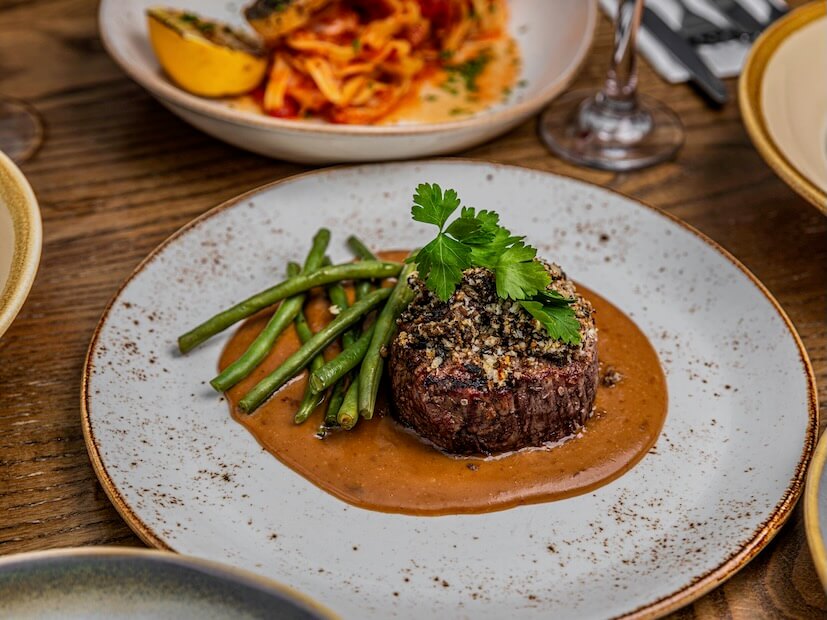
Premium steakhouses build trust through repetition that borders on clinical precision. Guests expect the same crust, aroma, color, and tenderness every visit, regardless of service pace. That result depends on steady sourcing, strict temperature control, and disciplined timing at each station. Behind a calm dining room sits a kitchen ruled by sequence. Beef storage, surface preparation, searing, carryover cooking, and resting all shape the final plate before it reaches the table.
Sourcing Sets the Ceiling
Quality starts long before heat enters the process. At places such as a steakhouse in Winter Park, cooks depend on beef with even marbling, reliable aging, and uniform size. Those factors influence moisture retention, fat rendering, and internal heat movement. Flavor draws attention first, yet structure determines chew, juiciness, and mouthfeel. A well-selected strip or ribeye gives the line a predictable baseline before seasoning or grilling begins.
Thickness Drives Timing
Steak thickness controls more than visual presence on the plate. It affects sear duration, center temperature rise, and how much room a cook has to correct course. Thin portions color fast, then overshoot with little warning. Thicker cuts allow stronger crust development before the interior reaches target doneness. That margin matters during a crowded dinner rush. Consistency improves when every portion behaves the same way on the grill.
Tempering Improves Control
Very cold beef often cooks with a sharp contrast between the surface and center. Many kitchens leave portions out briefly so the exterior loses some chill before grilling. That short pause supports more even thermal movement through the muscle. The middle remains cool, yet the difference narrows. Medium-rare looks cleaner after slicing, and the gray outer band stays thinner.
Salt Works Early
Salt changes the surface before anyone tastes the steak. Given time, it pulls moisture outward, then that liquid returns carrying dissolved seasoning back into the outer layers. Browning improves because the surface chemistry becomes more favorable for crust formation. Last-minute seasoning can still succeed, though the timing window gets tighter. Strong kitchens plan ahead. Steaks arrive at the grill already set up for balanced savoriness and deeper color.
Surface Dryness Builds Crust
A wet exterior slows browning and encourages steaming. Premium kitchens dry each cut carefully, then avoid crowding the cooking surface so moisture can escape quickly. Fast evaporation clears the way for caramelization and protein browning. That is where much of a steak’s savory depth develops. Rendered fat adds aroma as it hits the heat. Guests often register that smell before the first bite, and expectations rise immediately.
Heat Must Stay Consistent
Power matters, though stability matters more. Premium kitchens often use separate heat zones, one for aggressive searing and another for controlled finishing. That arrangement gives cooks a clear path instead of forcing constant guesswork. Color develops over stronger heat, then the steak moves aside to finish more gently. The method protects the crust, reduces scorching, and helps the center land at the requested doneness with fewer corrections.
Internal Temperature Rules
Experienced grill cooks still rely on thermometers because tactile judgment has limits. During busy service, measured temperature prevents drift and keeps standards intact. A steak removed at the proper point keeps climbing a few degrees while it rests. Carryover heat is expected, not accidental. Teams train for that rise and pull each cut early enough for the center to settle where it belongs, from rare through well-done.
Resting Protects Juiciness
Resting is not a formality; it is moisture management. Heat pushes liquid inward and outward at the same time, creating pressure within the muscle fibers. A short pause allows those fibers to relax and hold more juice during slicing. Cut too early, the plate fills, and the meat tastes drier. Premium houses protect this interval carefully. That patience often separates a rich, succulent steak from one that merely looks appealing.
Butter, Smoke, and Finish
Finishing touches should sharpen the result, not conceal the beef. Some kitchens add butter for sheen and a fuller mouthfeel. Others use a hot broiler or wood-fired element to deepen the aroma at the end. Pepper, herbs, or finishing salt may add contrast across the crust. These additions work best in restraint. Technique remains central, while garnish supports the steak’s natural flavor, fat profile, and texture.
Training Makes It Repeatable
Consistency comes from systems more than instinct. Premium steakhouses train staff on portion standards, grill zoning, pull temperatures, resting windows, and final plate checks. Managers watch yields closely because errors often appear there before diners notice a problem. Repetition builds muscle memory at every station. Strong routines turn excellent ingredients into dependable meals across lunch, dinner, and holiday service. That is how quality holds steady across many nights.
Conclusion
Perfect steak cookery appears simple at the table, though the result depends on many controlled decisions made in sequence. Beef grade, cut thickness, salting time, surface dryness, grill zoning, thermometer use, and resting all influence the final bite. Premium steakhouses succeed because those steps become habit rather than improvisation. Diners experience that discipline as confidence, a steak that arrives properly cooked, deeply flavored, and satisfying with reassuring consistency.
People also read this: Transforming Boys’ Celebrations: Active Play as the Heart of Unforgettable Memories