Where to go in Northern Spain for Unique Travel Experiences


Years ago, my partner and I spent a month travelling in the south of Spain, through the cities and villages of Andalusia, grand in their architecture and soulful in their music. Spain therefore, has always evoked in me images of intricate Arabic design, underground flamenco gatherings and Spanish guitar music spilling out on cobblestoned streets.

Depending on where you’ve been or read about, thinking about travelling in Spain might also conjure up images of its vibrant, busy cities or coastal towns fighting for space on their beaches.

But last month, while travelling on assignment for Spain Tourism, I was introduced to a side of Spain I had no idea existed. In the Spanish Pyrenees and the mountains of Castilla y León, I was surprised to witness spectacular landscapes, isolated valleys and forgotten villages, and centuries of mountain culture and tradition, still preserved. I learnt how conscious travel here can protect living culture, prevent migration to the cities, keep alive stories of love and kindness, revive ancient heritage, restore nature, and inspire a new wave of creativity.

If you ever visit Northern Spain (and you must!), take the time to slow down and connect with these mountain communities. Perhaps through them, you’ll also find a new perspective to view the world today:

Conscious travel in Catalunya

Slow down in an isolated valley with its own language and music!
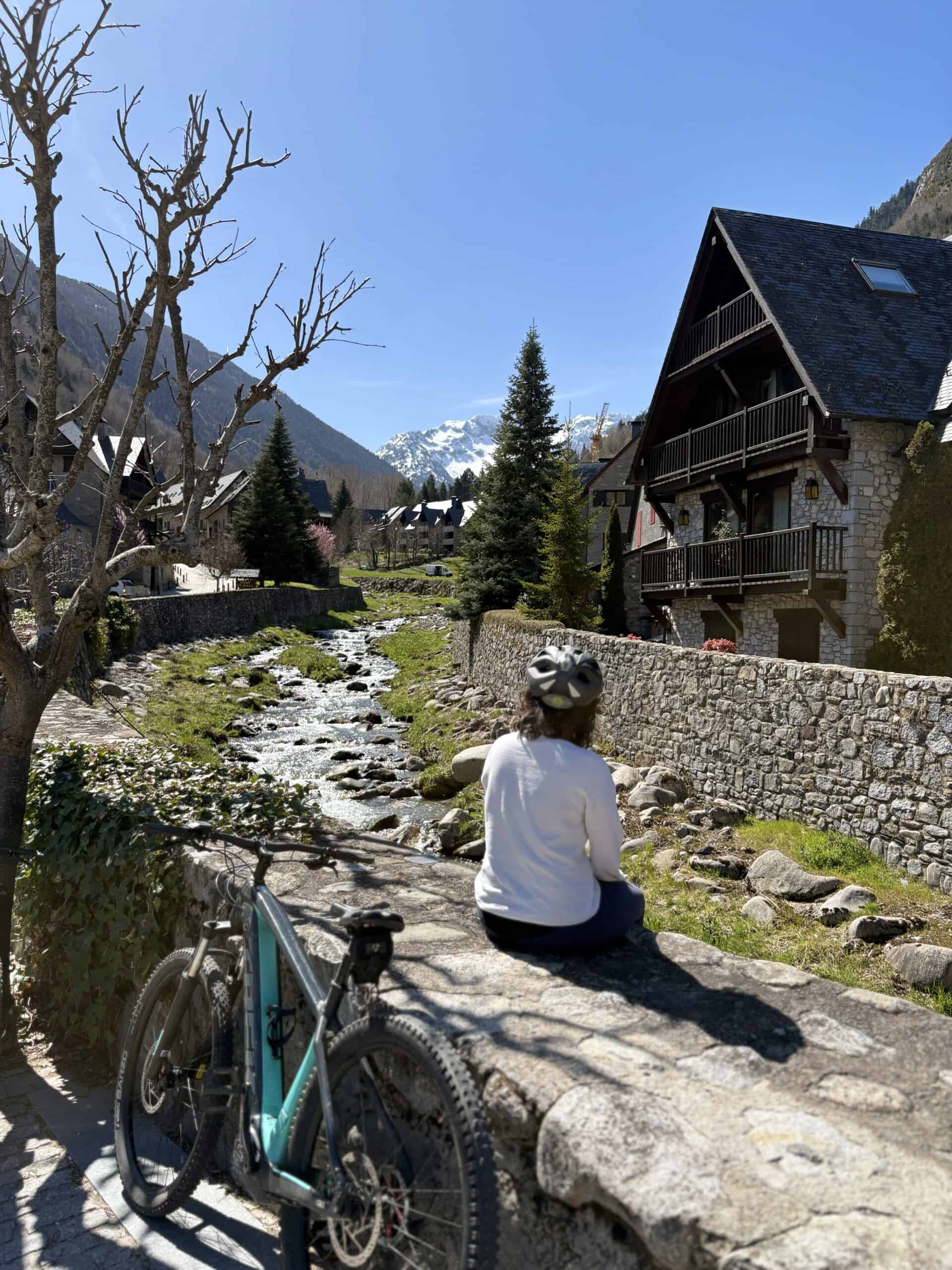
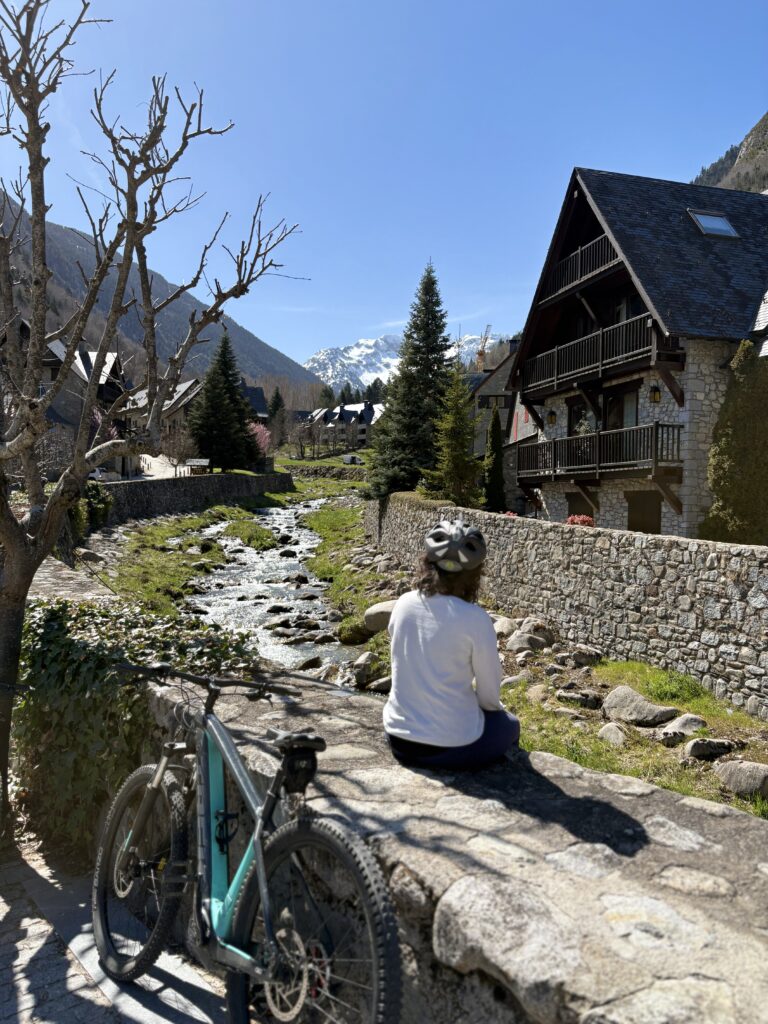
Val d'aran, Arties catalunya
Cycling in Val d’Aran, home to some of the most beautiful towns in northern Spain.

We drove just 3.5 hours from Barcelona (or 5 hours by bus) to arrive in Val d’Aran – a remote valley in the Spanish Pyrenees that became accessible with a mountain tunnel only around 1950. Before that, it remained cut off from the rest of Catalunya, isolated by its high mountains. An ancient shepherd trail had to be walked for days to arrive here. As a result, Val d’Aran developed its own music, culture, governance, architectural style and even language – Aranese!

I remember cycling along its picturesque villages, gushing rivers and ancient Romanesque churches, hearing fascinating stories from my local guide about the folklore and traditions that still inhabit these mountains. On winter solstice, young people still fire up wooden torches and run down the mountain in a centuries-old tradition, to usher in the light of longer days.

TIP: Stay at Parador de Arties with heritage 15th century architecture, in the scenic village of Arties. Also check out Hotel Nau Iori in Vielha, a small, eco-friendly hotel with solar energy and vegan-friendly, organic food.

Also read: A Mi Amada – A true love story from the Spanish Pyrenees

Witness the mindblowing digital restoration of a 12th century Romanesque church
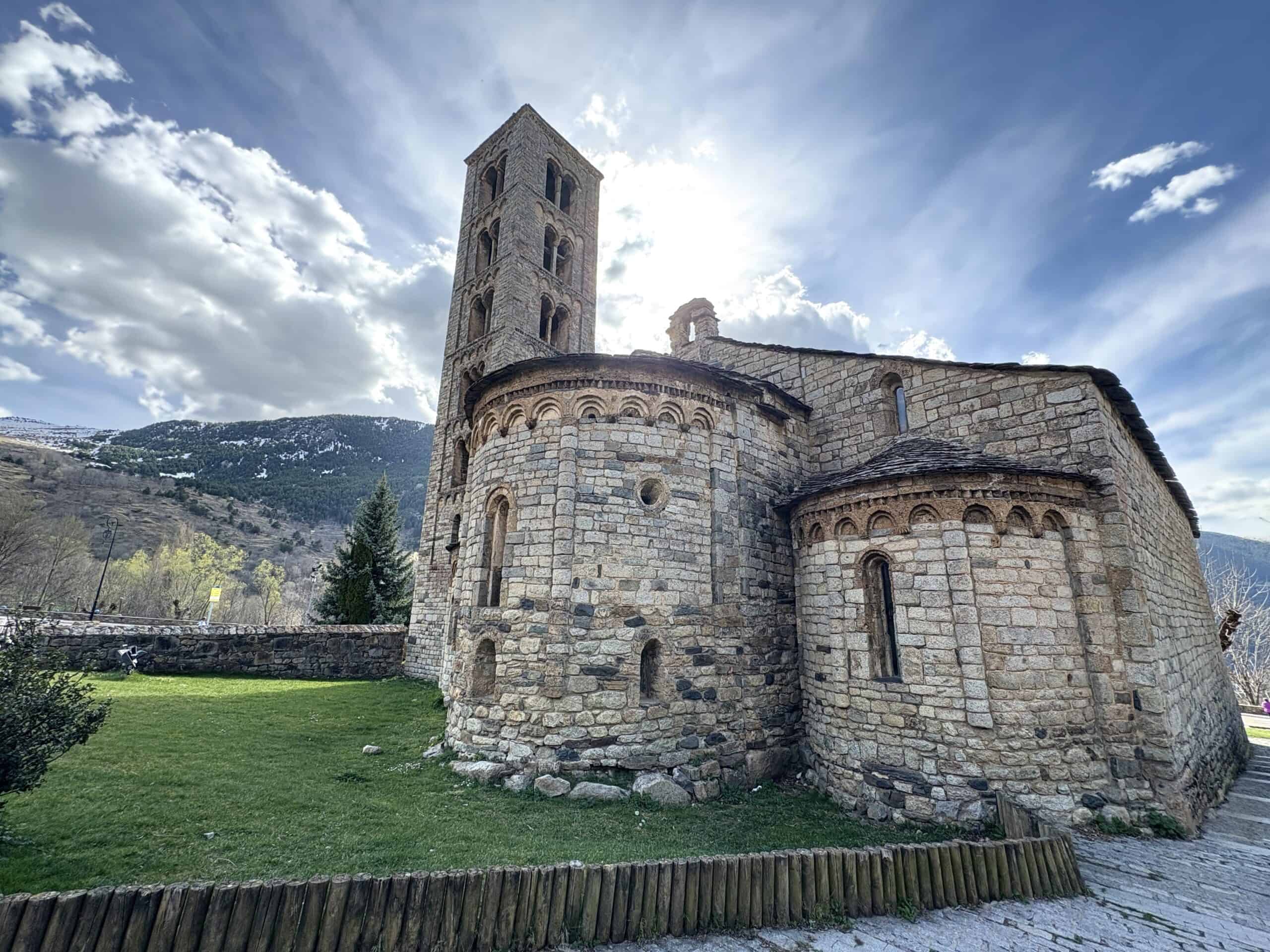
Vall de Boi churches
The restored 12th century stone church of Taüll.

Visiting UNESCO World Heritage Romanesque churches built between the 12th and 15th centuries in the dreamy stone villages of Vall de Boi, in the backdrop of snow-dusted peaks and spring wildflowers was magical enough. But what lay inside blew my mind.

Back in the 1100s, in the granite Church of St. Clement in Taüll, artists created fresco paintings on the walls using natural pigments – lime and chalk for white, mineral charcoal for black, iron oxides found in the Pyrenees for yellows and browns, vermillion for red. But about a 100 years ago, crafty businessmen found a technique to transfer the paintings from the walls onto linen, and sell these stolen treasures to private collectors across Europe and the US!

It hasn’t been possible for the church to buy back the paintings, but in 2013, visual artists from Catalunya painstakingly used technology to recreate the lost paintings, pixel by pixel. I was mindblown to witness this video mapping tech project the paintings back on the ancient church walls, recreating a glimpse of its original grandeur – and felt convinced that technology has such a significant role to play in restoring living (stolen) heritage!

TIP: Get a combined ticket to visit multiple Romanesque churches in the valley.

Also read: First Time to Spain? 10 Travel Tips to Plan Your Trip

Learn about life and traditions in the Spanish Pyrenees in an eco-museum

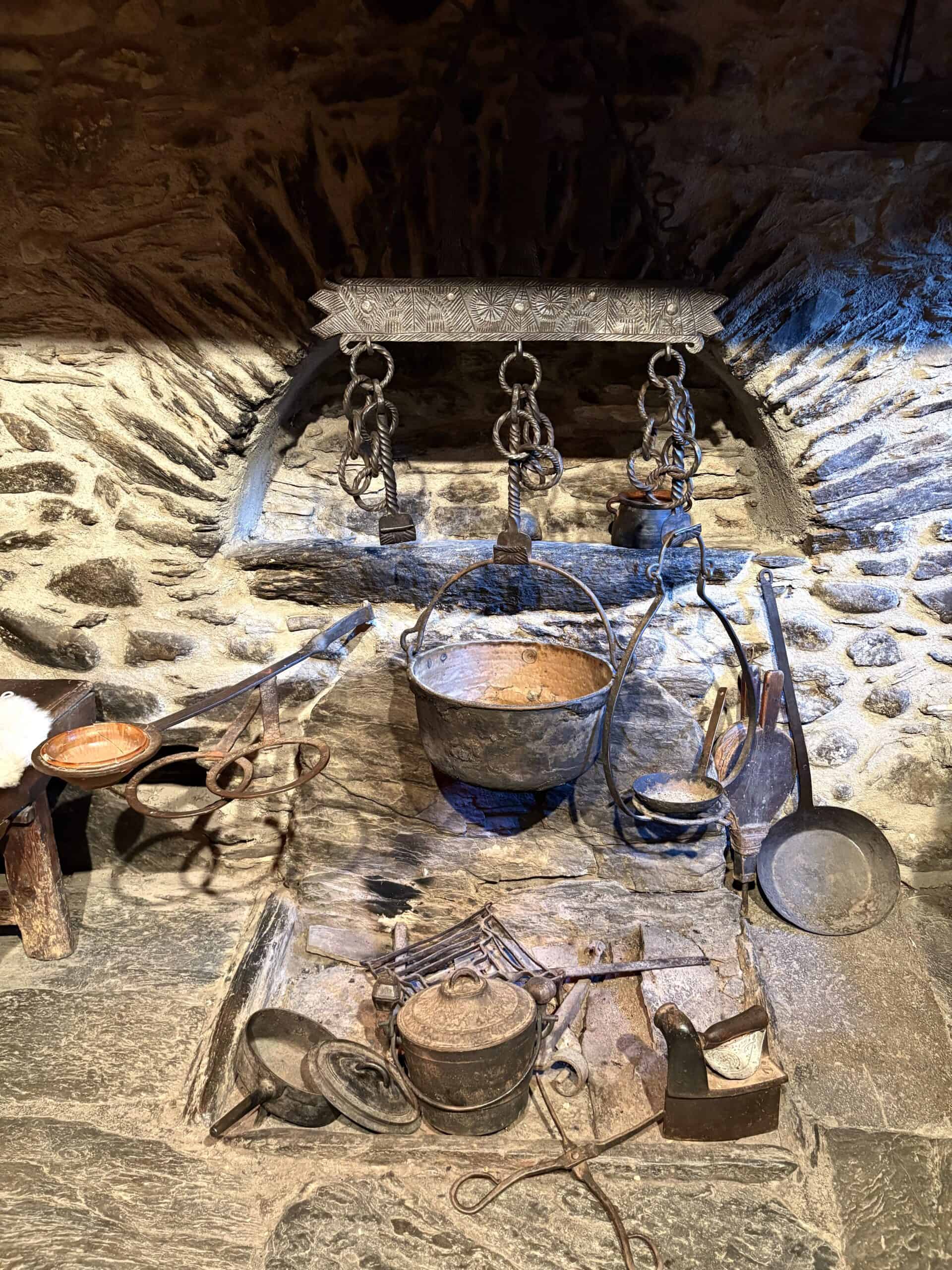
In the little village of Esterri Aneu, Casa Gassia – a traditional house from the 18th century with no inheritors – was converted into an eco-museum preserving the way of life in the Spanish Pyrenees 100+ years ago. Think charcoal bedwarmers, priced possessions during the era of transhumance when nomadic shepherd walked across these mountains and valleys with flocks of sheep, and basic kitchens with stone sinks and clay utensils.

I was surprised to find how much this forgotten way of life, now confined to a museum in the Spanish Pyrenees, resembles contemporary life in the Indian Himalayas. At the end of the eco-museum tour, our passionate guide sat us down to explain how marriages were once arranged in these villages, with parents and grandparents dictating who their daughters must marry! It seemed unthinkable that we still live that reality in India.

Also read: How Croatia Compelled Me to Rethink Travel Blogging

Raft down the ancient river trading route of a Pyrenees community
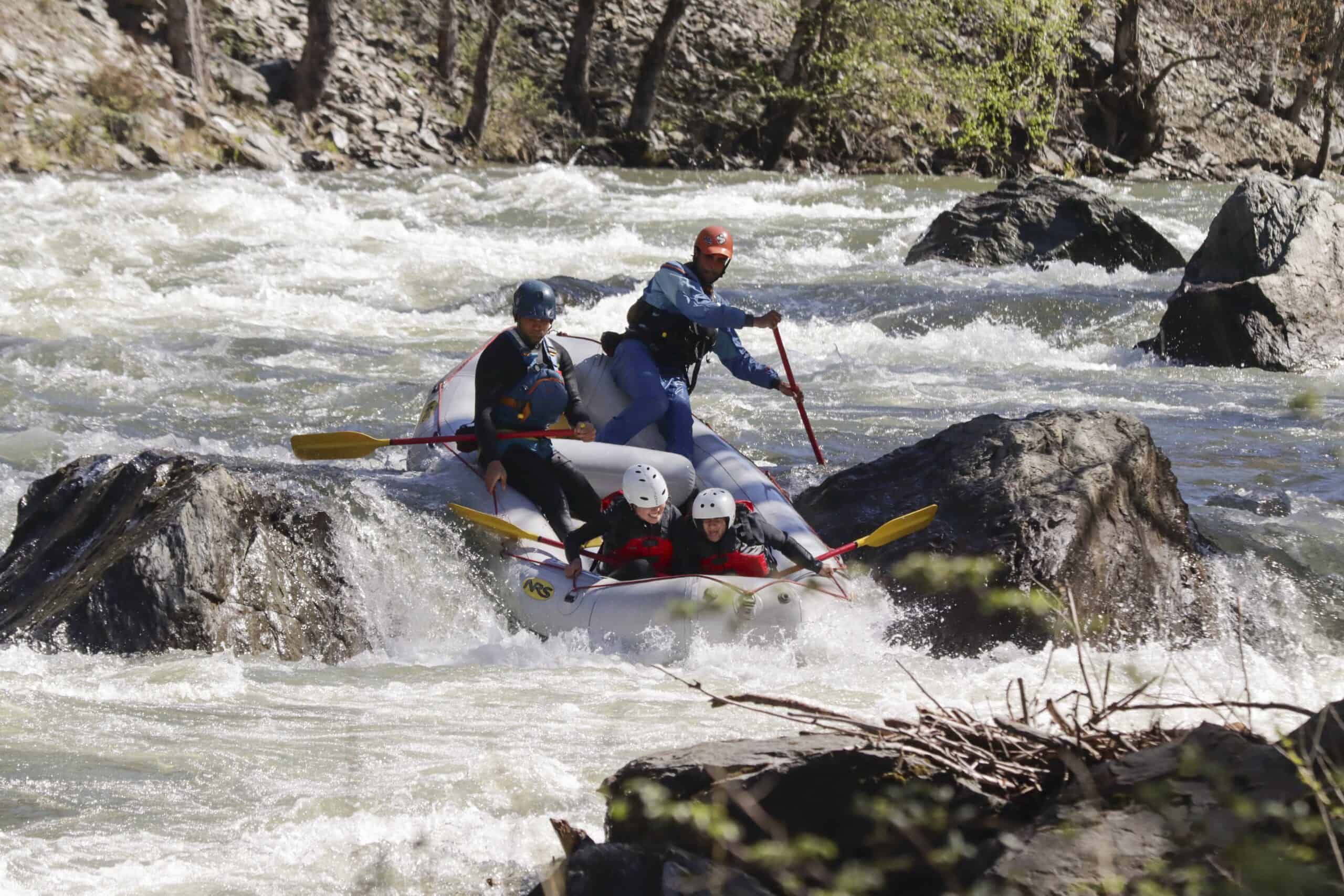
sort rafting
Rafting down the Noguera Pallaresa River in Sort.

A scenic train and bus ride away from the historic Spanish city of Lleida, the spectacular Noguera Pallaresa River once formed the ancient timber river trading route for mountain communities in the northern region of Spain. It offers a different sort of river adventure today.

We wore wet suits on a (luckily) sunny spring morning, boarded an inflated raft on the chilly river water, and slowly paddled downstream, surrounded by rugged mountains and dense forests. Then the rapids picked up, the river threw us into whirlpools, the cold water splashed over our faces and hair, and the thrill of the adventure soaked our souls!

My last memory of river rafting is as a teen on a school trip in Rishikesh, when the freezing water of the Ganga turned my lips blue. I wasn’t too excited at the idea of river rafting in the cold mountains again, but it turned out to be an experience to remember.

TIP: Stay at the heritage 17th century convent Parador de Lleida; have lunch at Teresa Carles, an incredible, women-owned, vegan-friendly restaurant!

Also read: A Slow ‘No Fly’ Journey from Switzerland to the Lofoten Islands, Norway!

Walk amid twisted rivers on a 7000-year-old shepherd trail
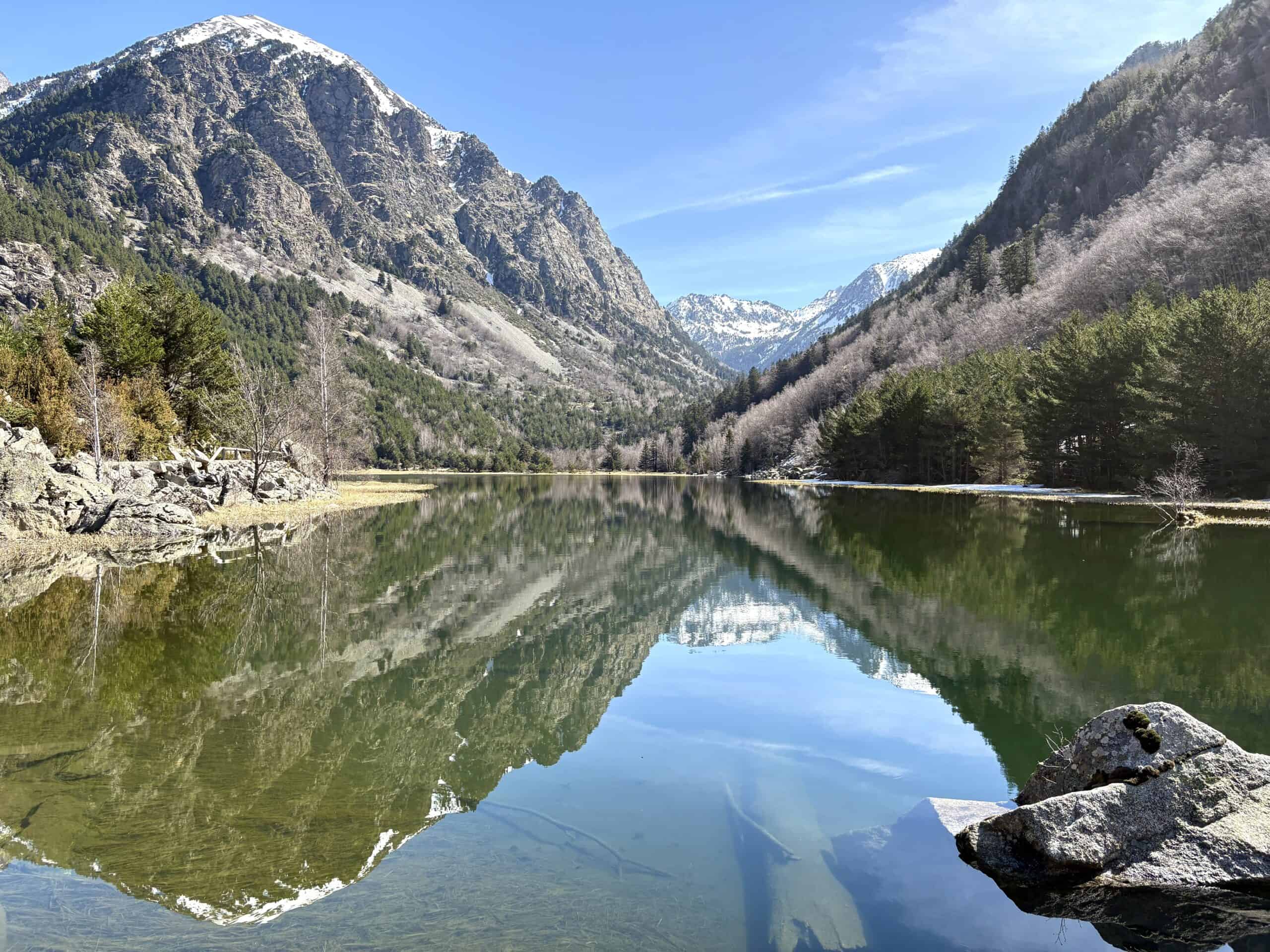
hiking Aigüestortes i Estany de Sant Maurici National Park
Where to go in northern Spain? Hike in Catalunya’s only national park.

In Aigüestortes i Estany de Sant Maurici National Park, we hiked up a gorgeous mountain trail that local shepherds have used for nearly seven centuries – along a meandering river, roaring waterfall, vultures circling above, the reflection of snow-capped peaks in the crystal lake waters below.

This is Catalunya’s only national park, home to 200+ glacial lakes and stunning 3000m mountain peaks, but perhaps what makes it most unique are its ‘twisted rivers.’ In the flat parts of this Alpine terrain, the rivers cut across pine and fir forests, creating surreal braids of streams aka twisted rivers. What I loved even more is that a circular boardwalk makes this spectacular natural wonder accessible to people of all abilities.

TIP: Cars are not allowed in the national park, but you can take a shared 4×4 taxi for 5.75€ per person per trip to get there.

Also read: Away From the Crowds: 11 Offbeat Places in Europe Waiting to be Explored

Conscious travel in Castilla y León

Walk one of the most stunning stretches of the Camino de Santiago

Camino de Santiago
Walking a short stretch of Camino de Santiago, near Cruz de Ferro.

I’ve been lucky enough to do some spectacular hikes in Europe and beyond, but the Camino de Santiago felt so different. I walked only a short stretch on the Camino Frances, but I quickly felt like it wasn’t just a solo hike. I crossed paths with people from different places – Andorra, Korea, Netherlands, Spain – each of us carrying our own physical and mental loads. I chatted with some and walked silently along some.

Even if you have just a day or two to spare, walk this pilgrim trail from Cruz de Ferro to El Acebo or Molinaseca. Over just a few kilometers, I experienced snow, mist, a light drizzle, a rainbow, wildflowers, snow-dusted mountains, frosted Alpine vegetation, stunning stone and wood villages, and kind-hearted locals and pilgrims.

I also learnt that many remote villages sustain their economies entirely because of pilgrims walking this trail, running rural BnBs and small cafes. This allows them to live close to nature in their ancestral homes, without having to migrate to the city to find a source of income.

TIP: Stay at Casa Rural Pajarapinta in Molinaseca, a welcoming family-run rural BnB.

Also read: Walking a 1000-year-old Pilgrim Trail Through the Italian Alps

Re-examine life at a living 10th century monastery
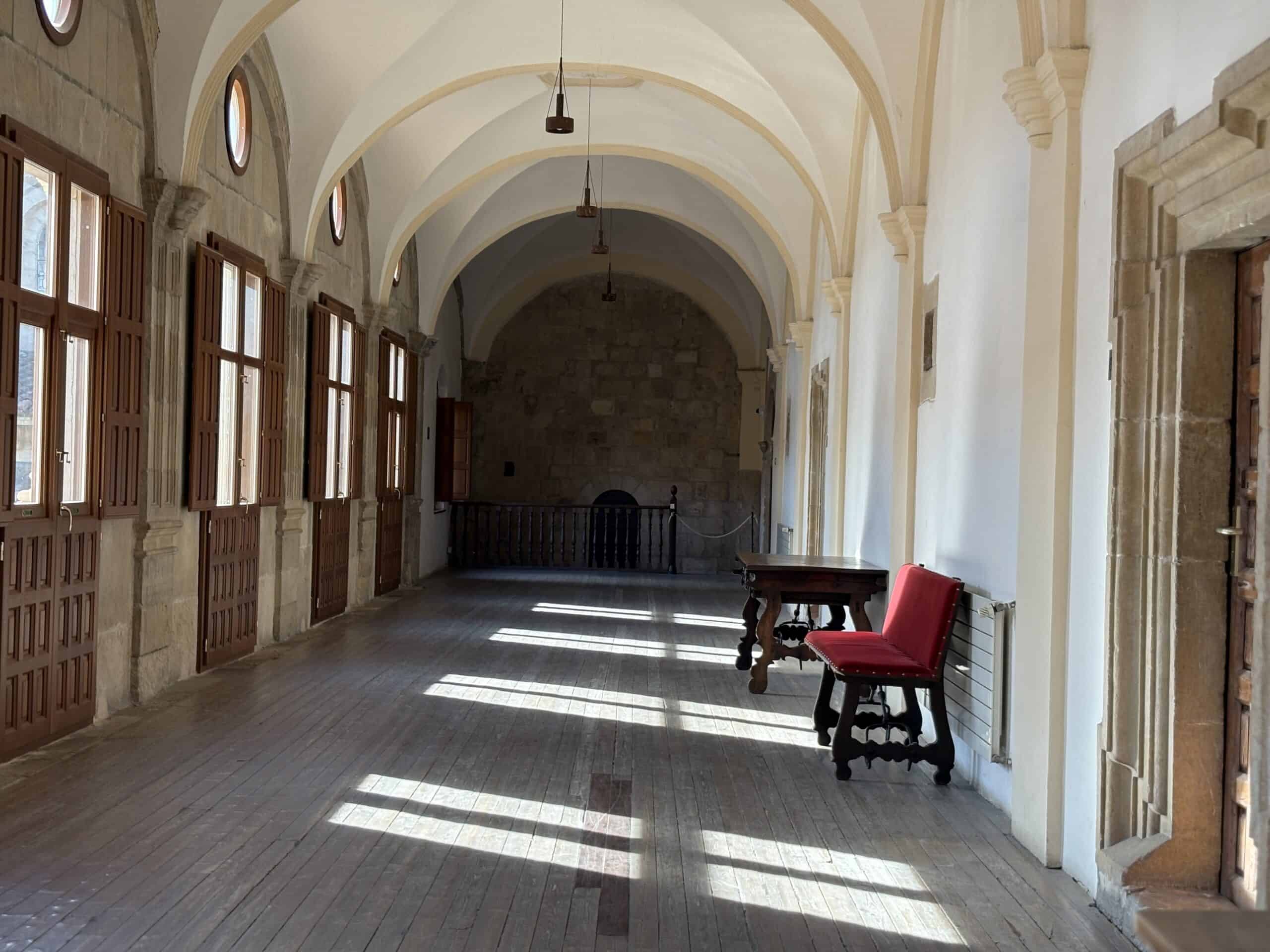
San isidro leon
Historic corridors of the San Isidro monastery in Leon.

I did a long train journey from Lleida, via Madrid, to León, and was surprised to arrive at Real Colegiata de San Isidoro at night. This is no regular hotel. It’s a living Christian monastery dating back to the 10th century – now part hotel, part museum and part living quarters of a small handful of monks!

I walked down its ancient corridors with monastery paraphernalia still adorning its walls, slept in what was once a cell for the monks, and started my mornings with breakfast in its historic cloister. Though now a luxurious abode, looking out my window over the ancient walls that were once the refuge of monks alone, made me contemplate the transient nature of life and the places we call home.

Also read: How I Used HomeExchange to Experience Europe Like a Local

Draw inspiration from Guadi’s world (and mind) at his earliest creations

Casa botines Leon
Little touches in Guadi’s oldest works in León.

As someone interested in the evolution of creative people, I was really fascinated to visit some of Antoni Gaudi’s earliest creations – Casa Botines in León, and the Palace of Astorga in the nearby town of Astorga. Long before his rise to fame as the architect behind the grand Sagrada Familia, he designed a residential stone building in León, the ground floor of which was for a tailoring company. This heritage building resembles a castle in a fairytale and is said to have inspired Disneyland, but it was the little touches within that I fell in love with, like a wood and glass cove in every apartment for street watching and ‘to be seen.’

Whether or not you’re interested in architecture, stepping into Gaudi’s earliest creations is a reminder of how our creativity can challenge the status quo, no matter when or where we’re born!

TIP: Experience life in a different era at the restored 12th century convent, Parador de Leon.

Also read: What Indian Cities Can Learn About Green Tourism from Copenhagen

Hike in the spectacular Picos de Europa National Park
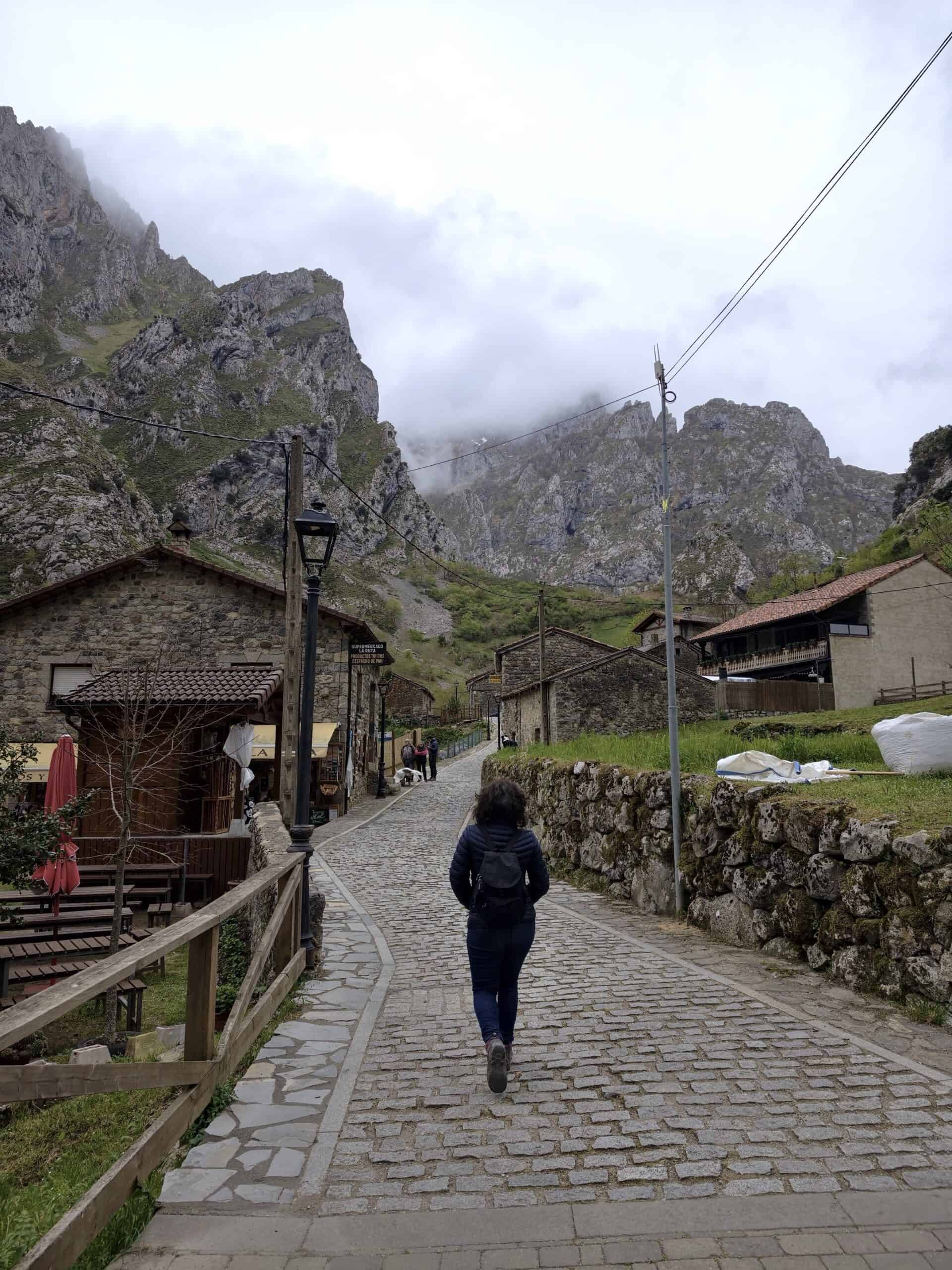
Picos de Europa national park
Timeless villages in the Pico de Europa National Park, one of many hidden gems in northern Spain.

I felt in awe as we drove out of León city into the Cantabrian mountains. Just an hour or so away, the landscape transformed into jagged limestone mountains, rolling meadows, river gorges and timeless stone villages. In the Picos de Europe National Park, I did short hikes along a glacial lake, into a forest with an abandoned chapel and to an old bridge straddling a gorge high above the river. We chanced upon a cryptic contraption once used by the local community to chase wolves away from livestock!

This was Spain’s first national park, and I can’t wait to return someday to do a circular hut-to-hut hike, wake up to a sea of clouds, and have that ‘end of the world’ feeling.

TIP: Experience some of the region’s most incredible natural wonders with WildWatching Spain.

Also read: The Swiss Alps on an E-bike: 385 Km, 7 Alpine Passes, 6 Days!

Soak in the magnificence of one of Europe’s largest stained-glass window collections in a 13th century cathedral
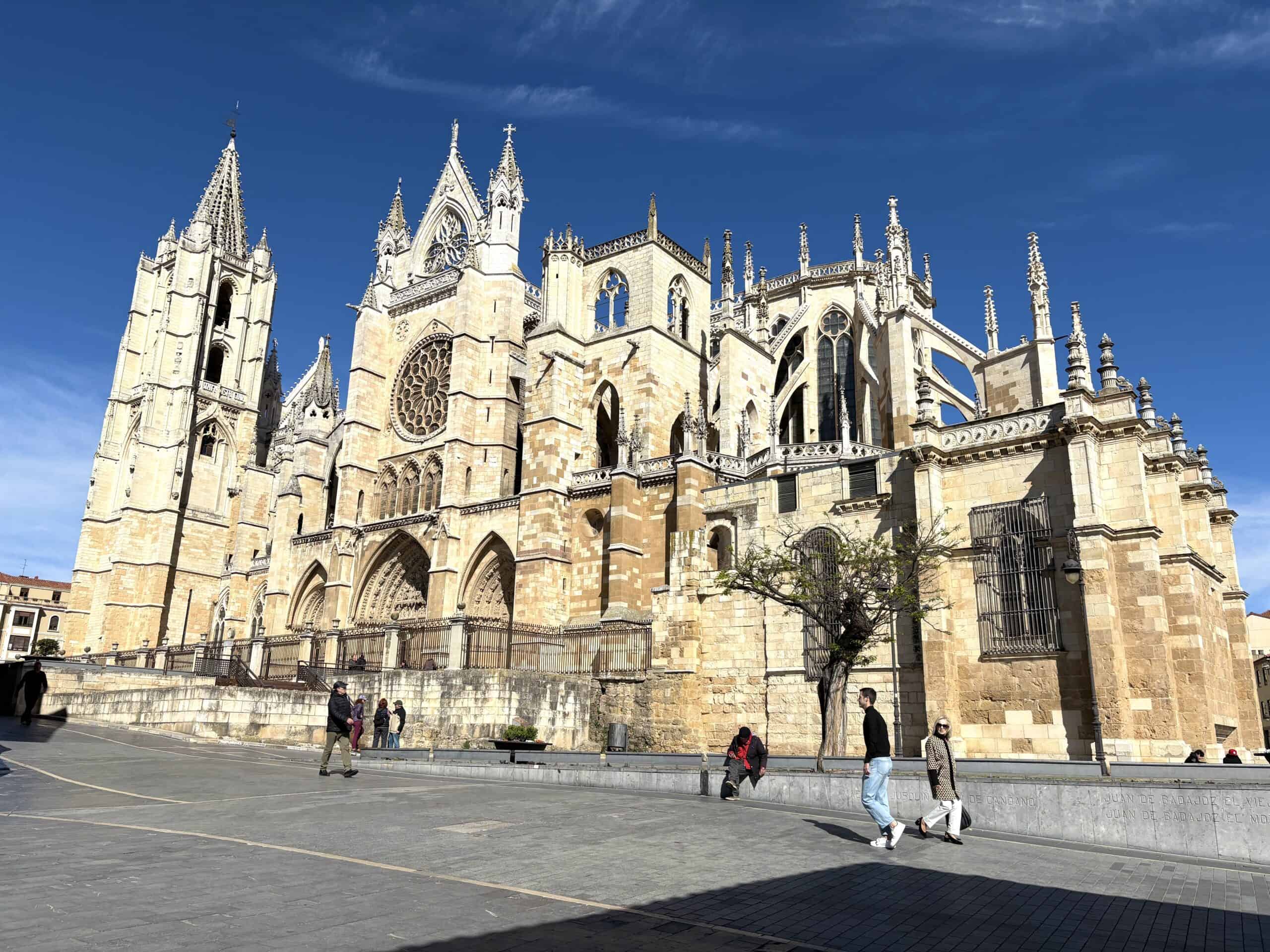
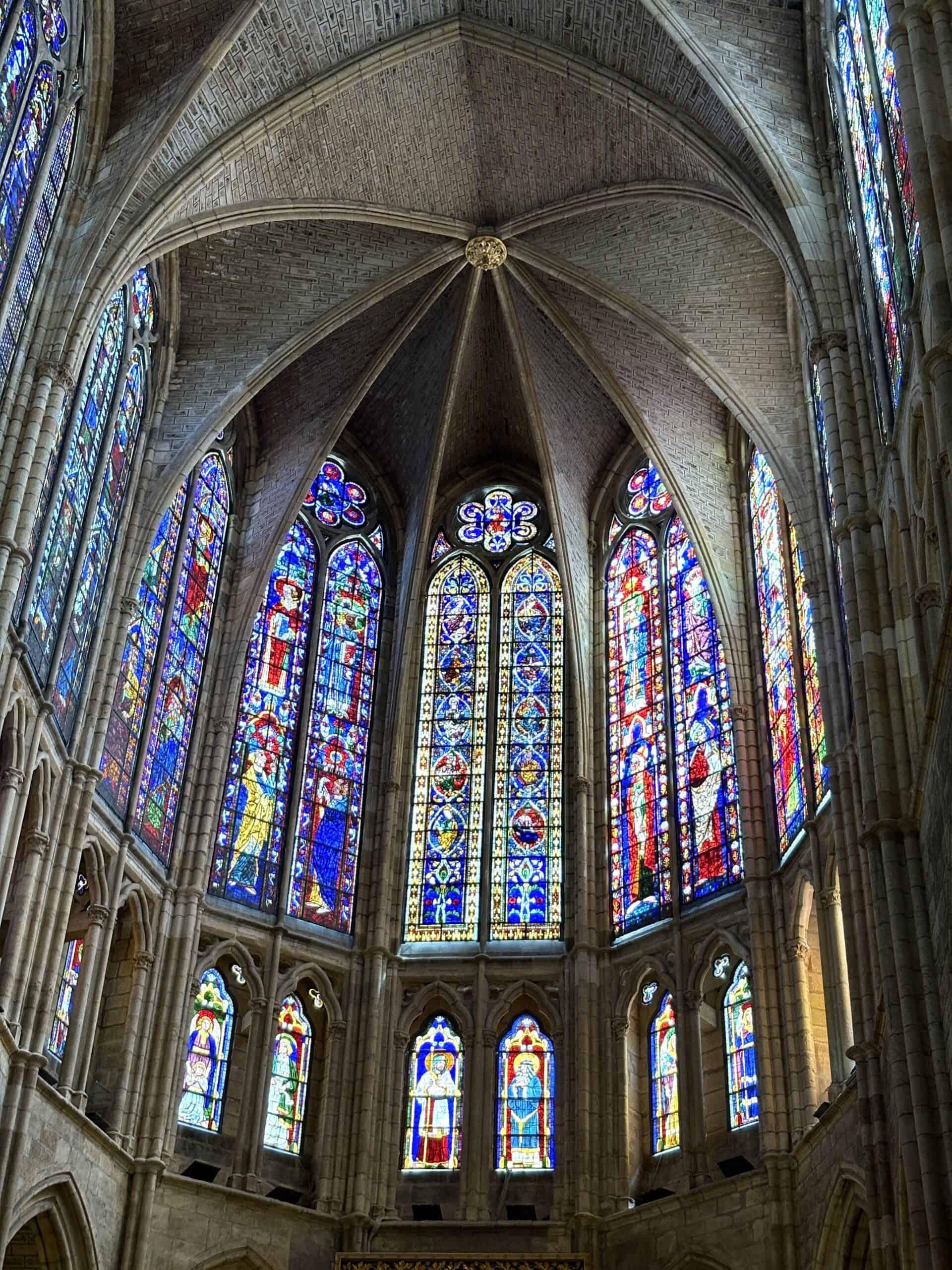
My first impression of the city of León is witnessing the incredible gothic León Cathedral at night. Its grand facade, lit up by night lights, is something else. But what is even more awe-inspiring is the spectacle that awaits within its walls. On a late morning, I found myself surrounded by warm sunlight lighting up the stained glass windows covering its high walls – such a magical feeling!

I learnt that the cathedral is currently in the midst of El Sueño de la Luz (the dream of light) – a long term restoration effort to clean the stained glass windows, replace their iron frames with non-rusting brass and add a protective layer for air circulation to make it adaptable to varying weather conditions. This costs 5000 Euro per square meter, paid for entirely by tourism; a reminder of how tourism can help protect our cultural heritage.

TIP: I highly recommend my local guide Blanca for all things León!

What would you most like to experience in Northern Spain?


Source link

Leave a Reply

Subscribe to Our Newsletter

Get our latest articles delivered straight to your inbox. No spam, we promise.

Recent Reviews


An AI voice agent is a software system that conducts phone conversations autonomously, dialing, listening, and responding in natural language without a human agent on the line. Unlike IVR systems that offer fixed menus, AI voice agents understand unscripted speech, adapt to what a caller says in real time, and execute actions like qualifying a lead, booking an appointment, or routing to a human closer. 

For regulated industries, modern AI voice agents also enforce compliance rules, such as TCPA requirements, state dialing windows, DNC validation, and opt-out detection, at the infrastructure level, not through agent training.

This ultimate guide defines what an AI voice agent is, how it works, and why regulated industries need them in 2026.


Summary

  • An AI voice agent is software that conducts phone calls without a human agent. It dials, listens, responds in natural language, and routes qualified contacts.
  • The key difference from IVR is conversation. IVR follows menus. AI voice agents understand and respond to natural speech, including objections, off-script questions, and mid-call changes.
  • For regulated industries, compliance is built in. Fully managed AI voice agents automatically enforce TCPA rules, state-specific dialing windows, consent validation, and opt-out detection, instead of relying on agent training.
  • The business case is structural, not incremental. One AI voice agent campaign can run the equivalent output of a 10-person SDR team at a fraction of the cost, with no overtime and no voicemail fatigue.
  • Not all AI voice agent platforms are equal. Developer-grade APIs give you the voice layer. Fully managed platforms give you the voice layer plus the compliance infrastructure that regulated industries actually need.


What Is an AI Voice Agent?

An AI voice agent is a purpose-built software system that conducts outbound or inbound phone conversations without a human representative on the call. It initiates and receives calls, speaks using a synthesized voice, processes what a person says using natural language processing, and responds appropriately, qualifying the lead, answering questions, handling objections, and moving the conversation toward a defined outcome.

The terms “AI calling agent,” “AI phone agent,” and “conversational AI for voice” all refer to the same underlying technology: a large language model connected to a telephony system, configured to carry out specific call objectives on behalf of a sales or contact center team.

For sales teams and call center operators, the practical definition is simpler: an AI voice agent does what a human SDR does on the phone, at a consistency and scale that humans cannot replicate.

How an AI Voice Agent Actually Works

The most common misconception about AI voice agents is that they are advanced auto-dialers playing pre-recorded scripts. They are not. Here is what actually happens on an AI voice agent call, from start to finish.

  • Pre-call compliance checks. Before a single dial goes out, a fully managed AI voice agent platform has already run the number through the National Do Not Call Registry, validated the TrustedForm consent token, confirmed the number falls within state-specific dialing windows, and verified it has not exceeded velocity cap limits. These checks happen in milliseconds, at the system level, before the call connects.
  • The opening. When a prospect answers, the AI voice agent identifies who is calling, states the reason for the call, and asks the first qualifying question. The experience is natural because the agent is built to handle real conversational patterns, hesitation, early questions about who is calling, and requests to call back later.
  • The qualification loop. As the prospect responds, the AI listens and extracts structured data relevant to the campaign objective, insurance eligibility, homeownership status, income range, and appointment availability, and then it checks the qualification criteria. Prospects who do not qualify are handled cleanly and courteously. Prospects who qualify are moved toward the handoff.
  • The live transfer or booking. A qualified prospect is either connected in real time to a human closer with a structured handoff that includes everything the AI learned during the call or booked directly into the sales calendar. The human agent steps into a warm, pre-qualified conversation rather than a cold call.
  • Post-call data flow. After the call ends, the full transcript, recording, qualification data, and outcome are pushed to the CRM. No manual entry. No data loss between the AI conversation and the human follow-up.

Why AI Voice Agents Are Not IVR Systems

IVR (interactive voice response) has been a fixture of call centers since the 1970s. An IVR system offers menus. Press 1 for sales. Press 2 for billing. A caller cannot have a conversation with an IVR system. If they say something outside the expected options, the system does not know what to do.

An AI voice agent is a conversational system. It processes natural speech and responds contextually. A prospect can say, “I am not sure I qualify because my credit took a hit last year,” and the AI voice agent can respond with a follow-up question, clarification, or redirect, the same way a skilled human agent would.

This distinction matters because most real sales calls do not follow a script. Prospects ask unexpected questions, raise objections, change subjects, and qualify themselves through unscripted responses. IVR cannot handle such interactions. AI voice agents are built specifically for it.

The practical result is that AI voice agents have higher contact rates, qualification rates, and qualified conversation volume than IVR systems because they can handle all kinds of human responses instead of forcing callers into strict menus.

Why Regulated Industries Need AI Voice Agents

An AI voice agent serves as more than just a productivity tool for industries that operate under the Telephone Consumer Protection Act, state-specific calling regulations, and federal consent requirements. It is a compliance infrastructure layer.

The TCPA compliance problem in call centers is not primarily a training problem. It is a volume problem. A human SDR making 150 dials per day under quota pressure makes judgment calls. They may not notice that a number was added to the DNC registry three days ago. They may dial Florida leads at 7:55 AM because the campaign starts at 8:00 AM and they are running behind. They may acknowledge an opt-out verbally on the call but forget to log it correctly.

These are not failures of character. They are the predictable result of humans operating under high-volume, high-pressure conditions. The statutory penalty for each error is $500 for negligent violations and $1,500 for willful violations, per call, with no aggregate cap. TCPA class actions reached an all-time record in Q1 2026, with 220 class actions filed in March alone.

AI voice agents address these issues at the source. The compliance rules are enforced at the system level:

  • TrustedForm consent tokens are validated before the first dial.
  • Numbers are checked against the National DNC Registry in real time, not in weekly batch scrubs.
  • State-specific dialing windows are applied based on the recipient’s area code, not the call center’s time zone.
  • Velocity caps prevent the same number from being called more than permitted within a given window.
  • Opt-out requests, whether the prospect says “take me off your list,” “stop calling,” or any natural language equivalent, are detected and enforced immediately across all active campaigns.
  • Full call recordings and qualification data are logged automatically for compliance audit trails.

For insurance companies, debt relief operators, mortgage lenders, solar installers, and healthcare practices, this infrastructure-level enforcement is the difference between a sustainable outbound operation and a litigation liability.

The Business Case for AI Voice Agents

The productivity case for AI voice agents is straightforward. One well-configured AI voice agent campaign can produce the equivalent output of a multi-person SDR team at a fraction of the labor cost, running full coverage hours including evenings and weekends when human teams are unavailable.

The more significant business case is what happens to your human team’s time. When AI voice agents handle the high-volume, repeatable qualification work, answering initial questions, running through eligibility criteria, and filtering out unqualified leads, your human closers spend their day talking to pre-qualified contacts rather than dialing through a list hoping someone answers.

The result is not just cost reduction. It is a structural improvement in close rates. Closers who receive a steady diet of pre-qualified live transfers perform better than closers who cold-dial their leads. The leads are warmer, the closers are less fatigued, and the pipeline is cleaner.

What to Look for in an AI Voice Agent Platform

Not all AI voice agent platforms are built for the same use case. The distinction that matters most for regulated industries is the difference between a developer-grade API and a fully managed platform.

A developer-grade API gives your team access to the voice conversation layer. You build everything around it: carrier registration, phone number acquisition and warmup, spam-label monitoring and rotation, compliance rule libraries, DNC scrubbing, CRM integration, and audit trail storage. Each of those is a separate engineering workstream, and each one carries compliance exposure if you do not build it correctly.

A fully managed platform handles the infrastructure and delivers the outcome. You bring the campaign objectives and the lead list. The service handles carrier relationships, compliance enforcement, number management, CRM integration, reporting, and audit trail maintenance.

For regulated industries, the practical cost of the build-your-own approach is usually higher than the cost of a managed service when you include engineering time, and it means your team is responsible for compliance instead of specialists who handle it full-time.

Before you evaluate any AI voice agent platform, ask these questions:

  • Who owns carrier registration and phone number warmup?
  • How are state-specific TCPA velocity caps enforced at the system level or through configuration your team manages?
  • Is TrustedForm or equivalent consent validation integrated before the first dial?
  • How are opt-out requests handled across all active campaigns simultaneously?
  • What does the compliance audit trail look like, and how is it accessed during discovery?
  • Is CRM integration native and bidirectional, or reliant on Zapier middleware?

The answers reveal whether a platform is genuinely built for regulated outbound or whether it is a general-purpose voice API being marketed as a compliance solution.

If your outbound team is grinding through low connect rates and burning through reps, Bigly Sales gives you a better way. Our AI voice agents qualify your leads, book appointments, and hand off warm prospects to your closers so your team spends every hour on real selling.

See what Bigly Sales can do for your pipeline at biglysales.com.

ABOUT BIGLY SALES

Bigly Sales is an AI-powered outbound calling platform designed for sales teams that need to move faster, stay TCPA compliant, and scale without adding headcount. From insurance and mortgage to debt relief and solar, Bigly Sales helps high-velocity teams automate prospecting, qualify leads, and book more meetings with AI voice agents. Learn more at biglysales.com.


Q&A BLOCK

Q: What is an AI voice agent?

An AI voice agent is a software system that conducts phone conversations autonomously using natural language processing. It dials outbound calls, understands and responds to what prospects say, qualifies leads based on predefined criteria, and routes or books qualified contacts without a human agent on the call.

Q: How is an AI voice agent different from an IVR?

IVR systems operate on fixed menus and respond only to button presses or specific scripted inputs. AI voice agents understand natural, unscripted speech and can handle objections, off-script questions, and mid-conversation direction changes. A prospect can speak naturally with an AI voice agent the way they would with a human caller.

Q: Can AI voice agents handle TCPA compliance?

A fully managed AI voice agent platform enforces TCPA compliance at the infrastructure level, including consent validation before every dial, real-time DNC scrubbing, state-specific velocity cap enforcement, time-of-day rules by recipient location, and real-time opt-out detection that blocks numbers across all active campaigns immediately. Developer-grade voice APIs do not typically include these compliance layers by default.

Q: What industries use AI voice agents most?

Insurance, debt relief, mortgage and lending, solar, home services, healthcare, legal, and staffing are the primary verticals. These industries share high-volume outbound requirements and strict compliance regulations that AI voice agents specifically address.

Q: What is a live transfer in AI voice calling?

A live transfer occurs when the AI voice agent has qualified a prospect and immediately connects them to a human closer in real time, passing along the structured qualification data captured during the AI conversation. The human closer steps into a warm, prequalified conversation instead of a cold call.

Q: What is the difference between a managed AI voice platform and a DIY voice API?

A managed platform provides the full infrastructure: carrier registration, compliance enforcement, number management, CRM integration, and reporting as a delivered service. A DIY voice API provides only the voice conversation layer. Teams using DIY APIs are responsible for building and maintaining the compliance and infrastructure layers themselves, which typically costs more in engineering time than a managed service and leaves the compliance exposure with the operator.


Source link