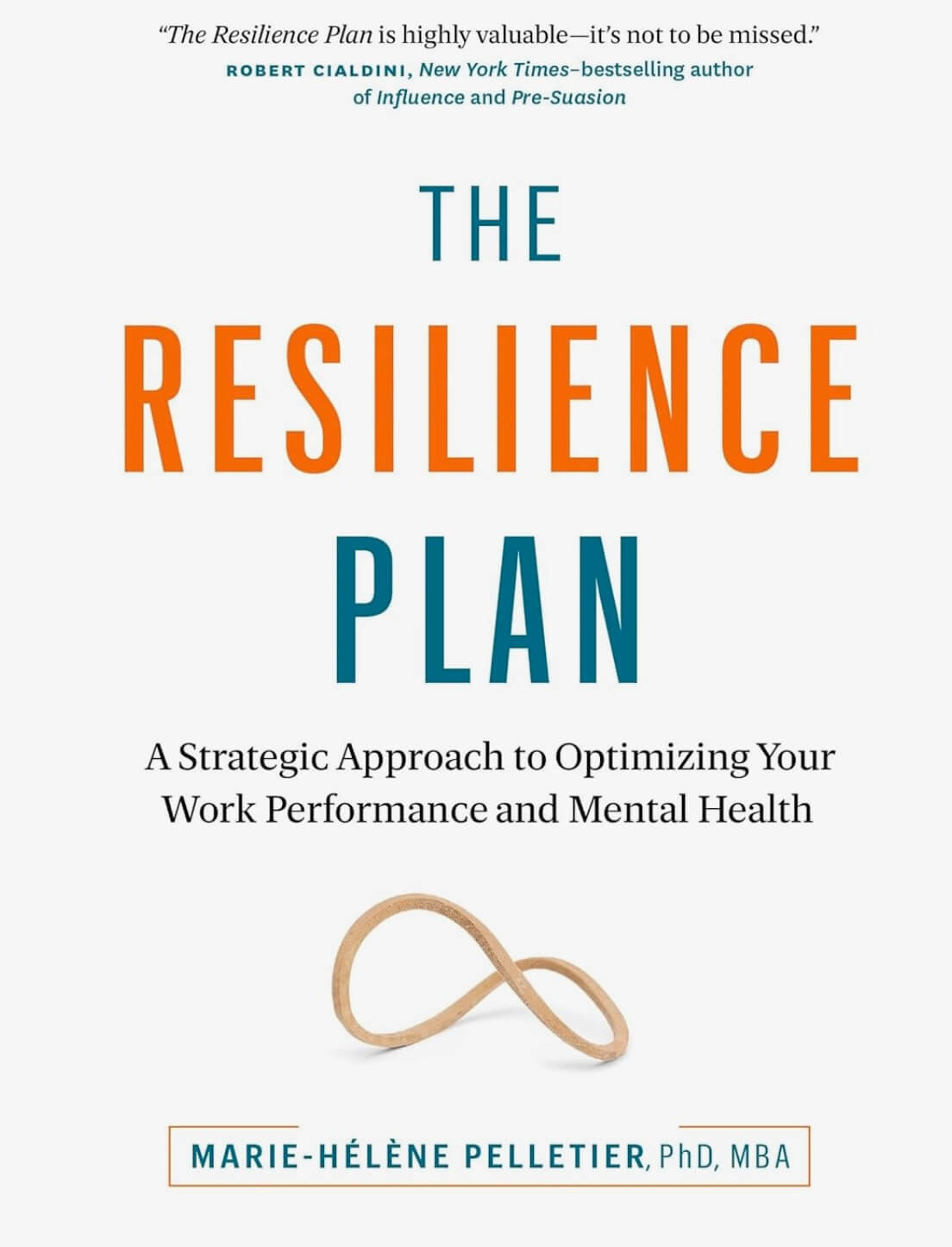
Dr. Marie-Hélène Pelletier, an award-winning author, psychologist, executive coach, and keynote speaker who helps leaders sustain high performance under pressure joins Enterprise Fit Radio.
This episode of Enterprise Fit Radio is in association with the Author Channel.
Sometimes people think you either have to tough it out or stay positive when it comes to resilience. What is your view?
What do we need to do differently to be resilient?
Why do we need to be strategic about our resilience? Why now?
We often hear or refer to burnout when it comes to our work/life balance being out of whack – what really is burnout to you?
Can pushing yourself to be more resilient actually cause more burnout?
What do you believe are some of the biggest barriers in the workplace to having better resilience?
I understand you have a book out that covers a lot of what we have discussed here today…what was the inspiration for your new book The Resilience Plan?
What tips do you have for leaders on how to build an environment where teams can be well, thrive and are less prone to burnout?
Throughout her career in management and psychology, Dr. Marie-Hélène Pelletier has spearheaded the dialogue on the crucial issues of leadership resilience and work performance. Drawing on her extensive background in corporate, insurance, and governance, she brings an international perspective and unique expertise on leadership. She has over 20 years of experience as a leadership psychologist, executive coach, and senior leader. Marie-Helene is a Member of the Global Clinical Practice Network of the World Health Organization, and past Director on the boards of the Canadian Psychological Association and the International Association of Applied Psychology. She has presented and authored and co-authored a number of industry and academic publications and has won numerous academic and industry awards.
Dr. Pelletier a member of the Harvard Business Review Advisory Council, an opt-in research community of business professionals. She has also taught leadership resilience for many years at the University of British Columbia’s School of Business. Her award-winning book, The Resilience Plan: A Strategic Approach to Optimizing Your Work Performance and Mental Health, was named a “Top 5 Book to Read” by Inc. Magazine and Forbes. She is a TEDx speaker and delivered Crossing the River: Resilience in the Age of AI, exploring the human and leadership implications of rapid technological change.
Dividend ETFs offer a convenient foundation for building passive income with lower individual stock risk.
The reinvestment of dividends and dollar-cost averaging can multiply growth over time.
Understanding the specific features of each ETF type ensures investments align with personalized financial goals.
Table of Contents
Understanding Dividend ETFs
Benefits of Investing in Dividend ETFs
Types of Dividend ETFs
Strategies for Maximizing Passive Income
Potential Risks and Considerations
Conclusion
Building a steady stream of passive income is a goal shared by many investors, and one of the most practical paths to achieving it is through dividend exchange-traded funds (ETFs). By pooling a range of dividend-paying companies, these funds provide investors with immediate diversification and regular, reliable income. If you want to get started with one of the top dividend ETFs in Canada, understanding the basics and benefits is key before investing.
Dividend ETFs are especially attractive to those who prefer a hands-off approach but still want exposure to profitable companies selected for their consistent dividends. This approach helps minimize the risk of stock picking while still offering a robust income stream, making it ideal for both new and experienced investors. Many investors start with dividend ETFs to take advantage of their liquidity, transparency, and broad market access. Whether you are looking to supplement your retirement savings or replace other forms of income, this strategy offers a pathway to financial independence.
Educating yourself on how dividend ETFs work, the kinds available, and the specific strategies for maximizing long-term returns should be the starting point. When you combine this knowledge with regular monitoring and thoughtful portfolio management, you create an effective plan for building lasting passive income.
Dividend ETFs are investment funds that focus on owning shares of established, dividend-paying companies. The stocks in these funds consistently pay dividends, creating periodic cash flow without the need for frequent buying and selling. Managed by professionals, these funds usually track indices comprising companies with strong dividend histories, ensuring a degree of predictability and reduced volatility compared to many other stock investments. For further insight into how ETFs are structured and managed, you can read more from Investopedia’s guide to ETFs.
Benefits of Investing in Dividend ETFs
There are several reasons why investors gravitate towards dividend ETFs:
Diversification: By owning a broad range of dividend-paying stocks, you minimize the risk associated with any one company’s struggles or economic downturns in a specific industry.
Regular Income: Unlike many stocks that only generate a return when you sell, dividend ETFs send out periodic payments, which can cover living expenses or be reinvested.
Cost Efficiency: ETFs usually have lower expense ratios than actively managed mutual funds, so more of your investment goes to work for you.
In addition to these advantages, these products often offer excellent liquidity, making it easy to buy or sell your investment at market prices.
Types of Dividend ETFs
Not every dividend ETF is the same. They are typically categorized based on their investment focus:
High-Yield Dividend ETFs: These funds prioritize stocks with the highest yields, providing higher immediate income. High yields may also indicate higher risk, which investors should carefully weigh before committing a significant portion of their portfolio.
Dividend Growth ETFs: These funds focus on companies that have consistently raised their dividends. This strategy offers not only a stable income but also potential for capital appreciation through stock price growth.
International Dividend ETFs: By seeking out global opportunities, these funds let investors access dividends from a wide range of economies, helping lower risk through geographic diversification.
Diversification across these types helps stabilize income and weather different market cycles. For an in-depth breakdown of how ETFs differ by category and market, Fidelity provides detailed ETF analysis.
Strategies for Maximizing Passive Income
To get the most out of your dividend ETF investments, a smart approach to strategy can boost both income and growth:
Reinvest Dividends: Many brokerages offer dividend reinvestment plans (DRIPs), which automatically reinvest payouts to purchase additional shares. This compounding effect can significantly accelerate your account growth over years or decades.
Dollar-Cost Averaging: By setting aside a fixed sum at regular intervals, you spread out your risk and avoid timing the market. This steady approach ensures you buy more shares when prices are low and fewer when they are high, smoothing out volatility.
Focus on Dividend Growth: Choosing ETFs that invest in companies with a record of increasing dividends helps shield your future income from inflation and declining purchasing power.
Diversify Income Sources: Combining high-yield ETFs with growth and international dividend ETFs helps limit potential losses from any one sector, country, or market event.
Monitor and Rebalance: Markets and economic conditions will shift. Reviewing your portfolio regularly and rebalancing as needed ensures your investments keep pace with your goals and risk tolerance.
Potential Risks and Considerations
No investment is without risk, and dividend ETFs come with their own considerations:
Market Risk: ETF values can fluctuate due to stock price swings, broad market corrections, or company-specific issues.
Dividend Cuts: During economic downturns, some companies may reduce or suspend dividend payments, thereby decreasing the income produced by the ETF.
Interest Rate Risk: When interest rates rise, dividend-paying stocks must compete with fixed-income options, which can make them less attractive and potentially cause price declines.
It is wise to review your holdings alongside financial news and economic reports to adjust strategies when needed. The Kiplinger Investing section is a reliable source for keeping up with market changes and guidance.
Conclusion
Dividend ETFs offer a powerful platform for building lasting passive income with diversification, efficiency, and simplicity. By selecting the right combination of ETFs, reinvesting regularly, and monitoring risk factors, you can build a sturdy financial foundation that aligns with your objectives. As with any investment, research and a clear understanding of your risk tolerance remain key to long-term success with dividend ETFs for passive income.
To provide the best experiences, we use technologies like cookies to store and/or access device information. Consenting to these technologies will allow us to process data such as browsing behavior or unique IDs on this site. Not consenting or withdrawing consent, may adversely affect certain features and functions.
Functional
Always active
The technical storage or access is strictly necessary for the legitimate purpose of enabling the use of a specific service explicitly requested by the subscriber or user, or for the sole purpose of carrying out the transmission of a communication over an electronic communications network.
Preferences
The technical storage or access is necessary for the legitimate purpose of storing preferences that are not requested by the subscriber or user.
Statistics
The technical storage or access that is used exclusively for statistical purposes.The technical storage or access that is used exclusively for anonymous statistical purposes. Without a subpoena, voluntary compliance on the part of your Internet Service Provider, or additional records from a third party, information stored or retrieved for this purpose alone cannot usually be used to identify you.
Marketing
The technical storage or access is required to create user profiles to send advertising, or to track the user on a website or across several websites for similar marketing purposes.