
Are Cruises Worth It: A Complete Guide To The Pros And Cons Of Cruising


Cruising has become one of the most popular ways to travel, and it’s easy to see why. The idea of unpacking once, visiting multiple destinations, and enjoying endless food and entertainment sounds like the perfect vacation. But like any travel style, there are pros and cons of cruising and it isn’t for everyone.

I love creating valuable content for you my readers, however, there is a cost to maintaining a website and there may be affiliate links scattered throughout the website. By clicking on the links there is no extra cost to you, however, I may receive a small profit.

The Pros And Cons Of Cruising
complete guide of the pros and cons of cruising

If you’re wondering whether a cruise vacation is right for you, understanding the pros and cons of cruising can help you decide if it fits your travel style, budget, and expectations. Whether you’re planning your first cruise or debating whether to book another one, here’s an honest look at the benefits and drawbacks of cruising.

The Pros Of Cruising

There’s a reason so many travellers fall in love with cruising, myself included. From convenience to entertainment, cruises offer plenty of advantages that make vacation planning simple and stress-free.

You Can Visit Multiple Destinations In One Trip

One of the biggest advantages of cruising is the ability to explore several destinations without the hassle of constant packing and travel logistics.

Instead of coordinating flights, hotels, and transportation between cities, your cruise ship becomes your floating hotel. You simply wake up in a new destination and head off to explore.

This is especially appealing if you want to sample multiple destinations, prefer stress-free planning, and enjoy a variety during your trip.

Unpack Once And Relax

Anyone who has done a multi-city trip knows how exhausting packing and unpacking can be. On a cruise, you unpack once and settle in for the entire journey.

This convenience makes cruising especially appealing for families, seniors, travellers who prefer a more relaxed itinerary, and anyone who dislikes the stress and chaos of airports.

There’s Always Something To Do

The thing that I love about cruising is that cruise ships are packed with entertainment and activities. Whether you’re traveling solo, as a couple, or with family, there’s usually something for everyone.

Depending on the ship, some of the activities offered include:

  • live shows and performances
  • pools and waterslides
  • fitness classes
  • casinos
  • movie nights
  • kids and teen programs
  • cooking classes, wine tasting, and other workshops

If entertainment options are important to you, cruising offers an incredible variety of choices.

One of the best things about cruising is the variety of entertainment available for all ages

Many Costs Are Included

Cruises often offer excellent value because many essentials are bundled into one price. You can either opt for the basic cruise package which includes your cabin and meals, or add in the extras such as wifi, beverages, and pre-paid gratuities.

While extras can add up (more on that later), the base price often covers more than a traditional vacation.

For travellers who like budgeting ahead, this all-inclusive style can make planning easier.

Food Options Are Plentiful

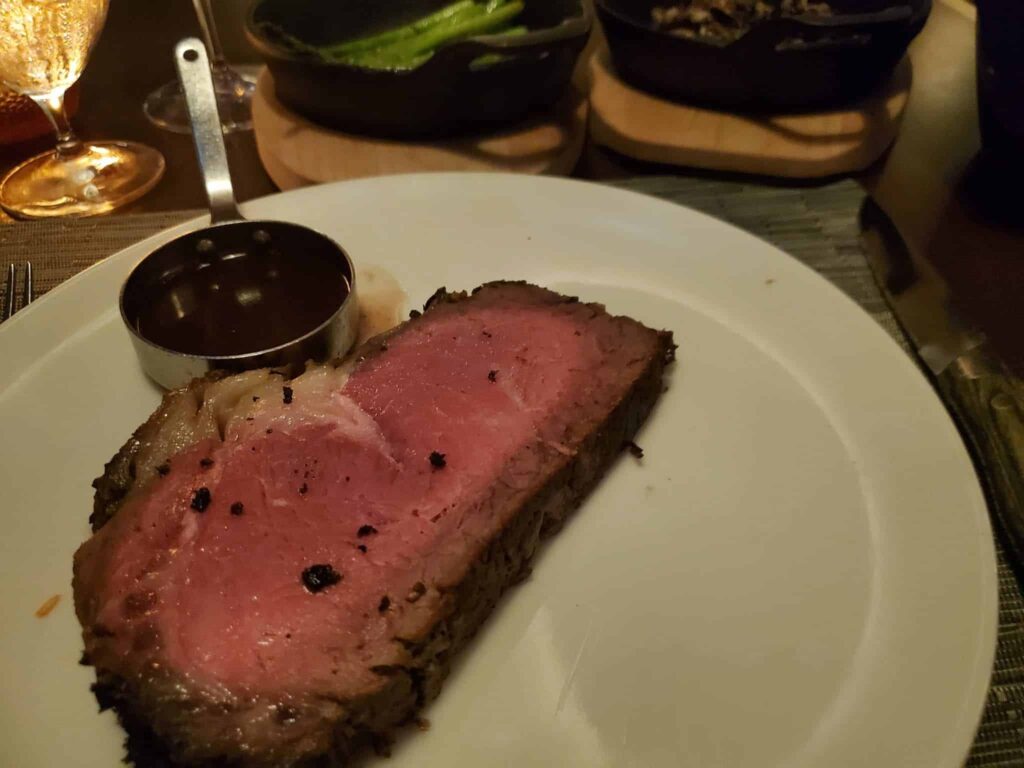
One of the highlights of cruising is the food. Most ships offer a wide range of dining options, which include buffets, sit-down restaurants, cafes, and specialty dining experiences.

For food lovers often say that the food is one of the most memorable parts of the cruise experience.

Great For All Ages

Cruises are one of the most versatile vacation options available. They can work equally well for couples, families, and multigenerational groups.

It’s one of the few vacations where everyone can enjoy their own pace.

Contact Kelly, a Licensed Travel Agent, to book your next dream vacation

The Cons Of Cruising

While cruising has many benefits, it also comes with drawbacks that are important to consider before booking.

Extra Costs Can Add Up Quickly

While cruises advertise attractive base prices, many extras are not included.

Some of the additional costs you should budget for are:

  • shore excursions, which typically range between $100.00 and $150.00 per person
  • specialty dining (which is optional)
  • alcoholic and non-alcoholic beverages
  • wifi packages
  • daily gratuities, which are charged per person
  • spa treatments

It’s easy to underestimate these expenses, which can significantly increase your total trip cost.

Just One Tip: I have cruised both on the base price and paying for the additional extras upfront. I found it to be more cost efficient to purchase the wifi, beverages, and pre-paid tips at the time of booking.

Limited Time In Each Destination

One of the biggest downsides of cruising is the short time spent in each port. Most stops last 6 to 10 hours, sometimes less. You won’t have enough time in each port to truly experience the culture of the destination.

Cruising is a great way to see the destinations and determine if you want to return, but it’s less suited for an immersive travel experience.

Crowds Are Common

Embarkation is very chaotic and crowded. If you dislike crowds, then cruising might not be for you

Now the part I dislike most about cruising….the crowds! Cruise ships can carry thousands of passengers, which can make finding a chair at the pool, or seats together in the theatre a challenge.

Once you become familiar with the ship, you’ll be able to find some quieter spots, but you can expect to find crowds at the buffet, pool, busy ports of call and embarkation and disembarkation.

Many of the cruise lines have attempted to cut down on the chaos of embarkation by having you choose your embarkation time beforehand. I’ve found that this has made a huge difference when if comes to crowds.

If you prefer quiet, off-the-beaten-path travel, the crowds can be frustrating.

Just One Tip: Choosing smaller ships or traveling during off-peak seasons can help reduce this issue.

Internet Access Can Be Expensive And Slow

Staying connected at sea can be challenging. Wi-Fi is often available but comes at an additional cost and may not be as fast as land-based connections.

For some travellers, unplugging is a benefit. But if you need to work remotely or stay connected regularly, this can be inconvenient.

Motion Sickness Can Be A Concern

While modern ships are designed to minimize movement, motion sickness can still affect some passengers.

There are many factors that can influence motion sickness, such as weather conditions, cabin location, and personal sensitivity.

Just One Tip: Choosing a mid-ship cabin on a lower deck can help reduce motion.

One of the downfalls of cruising is motion sickness.  Choose a cabin midship, lower level to minimize motion sickness

Environmental Concerns

Cruising has faced criticism for its environmental impact. Large ships consume significant fuel and can contribute to pollution.

Many cruise lines are improving sustainability practices, but this remains a consideration for environmentally conscious travelers.

The answer depends largely on your travel style. Cruising is the perfect option if you:

  • prefer convenience and variety
  • like having numerous entertainment options
  • want to visit multiple destinations easily
  • prefer structured travel
  • are travelling with family or a large group

Cruising may not be the ideal choice if you:

  • prefer slow, immersive travel
  • dislike crowds
  • want maximum flexibility
  • are travelling on a tight budget
  • need constant high-speed internet

Knowing what matters most to you helps to determine cruising is right for you.

Tips For Making The Most Of A Cruise

Extra's such as alcoholic beverages is one of the cons of cruising as it can become quite expensive

If you decide cruising is right for you, a little planning can make a big difference.

After taking numerous cruises, I’ve figured out a few tips such as:

  • book early for the best cabin selection
  • research what’s included in the cruise fare
  • budget for extras such as excursions and drinks (the excursions can be booked and paid for prior to the cruise)
  • choose your cabin location carefully
  • plan port days in advance
  • pack motion sickness remedies just in case (these can be purchased onboard but they are very expensive)

Just One Tip: As a travel agent, I can tell you that the majority of cruisers are now booking a full year in advance. This will ensure that you get the cabin that you want. There are often “early booking” sales that you can take advantage of by booking early.

Final Thoughts On The Pros and Cons of Cruising

There are many pros and cons of cruising, but lounging in the quiet spots is definitely the best part of cruising

When it comes to the pros and cons of cruising, there’s no one-size-fits-all answer. For many travellers, cruising offers unbeatable convenience, entertainment, and value. For others, the crowds, extra costs, and limited time in destinations may outweigh the benefits.

The key is knowing your travel style and expectations. If you enjoy easy planning, lots of activities, and visiting multiple destinations without logistical stress, cruising can be an unforgettable experience. But if you prefer slower travel and deeper exploration, another travel style might suit you better.

No matter what you decide, understanding the pros and cons of cruising helps you plan smarter and travel with confidence.

Travel Solo Like a Pro!

AIRFARE:

♥  CheapOair and WayAway offer flights at a resonable rate. Let CheapOair or WayAway find the cheapest and best flight for your destination

HOTELS & ACCOMMODATION:

♥  I use Booking.com to book all of my accommodations, both domestically and internationally. When booking in the United States, I use Trivago US

ACTIVITIES:

♥  Get Your Guide and Viator are the absolute best sites to plan and book any adventures, activities, and all things fun

BIKE AND MOTORCYCLE RENTALS:

♥  BikesBooking.com will find the best prices for bicycles, motocyles, and scooter rentals any place in the world.

CAR RENTAL:

♥  Economy Bookings will provide rental prices worldwide, which making it a one stop shop for the most reasonable car rentals

AIRPORT TRANSFER AND PRIVATE TOURS:

♥  Kiwitaxi is who you want to contact for transportation from the airport or train station.  Why not arrange for a PRIVATE CITY TOUR with Kiwitaxi at the same time.

CRUISES:

♥  Cruise Critic not only provides reviews and answers questions, it also offers great cruise deals. If your a cruise lover (like me), I highly recommend that you check it out!

TRAVEL INSURANCE:

♥  Travel insurance these times of natural disasters, travel interruption and baggage loss is no longer a place where you can cut costs. essentials.  It has become an essential part of travel. Visitors Coverage will take care of all of your insurance needs.

. Save The Pros And Cons Of Cruising



Source link

Leave a Reply

Subscribe to Our Newsletter

Get our latest articles delivered straight to your inbox. No spam, we promise.

Recent Reviews


Your best lead this week called at 7:43 PM on a Tuesday. Nobody answered. They left a voicemail. Your team found it Wednesday morning. By the time someone called back, the person had already signed with a competitor. That happens in sales operations every single day. Usually, nobody tracks it as a loss because the lead never entered the pipeline.

The problem isn’t your team. It’s the hours. Your sales team is probably pretty good. They work hard during the day, follow up on leads, and close deals. But leads don’t care about business hours. A homeowner researches insurance quotes after the kids are in bed. A small business owner thinks about their liability coverage on a Sunday afternoon. A mortgage prospect has questions at 6:30 PM after work. A solar lead fills out a form at 9 PM while watching TV. Those people are ready to talk right then, and if you’re not there, someone else is.

This is the after-hours problem. Although it doesn’t show up on your P&L as a line item. But it’s costing sales operations a lot more than they realize.

Voicemail Isn’t an Answering Service

A voicemail box is not an after-hours answering service. It’s a place where leads go to disappear.

Callback rates on voicemails in sales contexts are around 4 to 5 percent. That means 95 out of 100 people who call your business after hours and hit voicemail are gone. They didn’t leave a message. Or they left a message and didn’t pick up when you called back. Or they picked up and the conversation started cold because you had no idea what they actually wanted.

In insurance, mortgage, solar, and pretty much any industry where the same lead goes to multiple providers simultaneously, voicemail isn’t just inconvenient. It means your competitor got the conversation first.

What an After-Hours Answering Service Actually Does

An AI after-hours answering service picks up the phone when your team can’t. Not with a “press 1 for sales” menu. Not with a hold queue. With an actual conversation. The AI answers the call, greets the person naturally, and starts asking the questions your best rep would ask. What kind of coverage are you looking for? Are you a homeowner? What’s your timeline? What brought you to us today?

It listens to the answers. It asks for follow-ups. It figures out whether this person has a real need or is just poking around. If they’re serious, the AI can do a few things depending on how you’ve set it up. It can transfer them to an on-call rep right then. It can book a specific callback time. It can send your team an alert so the first call in the morning is already warm. And all of it gets logged. By the time your team walks in, they have a full summary of every after-hours conversation. Who called? What they need. How urgent it is. What was said.

No cold callbacks. No, “I saw you called last night, what was this about?” Just warm, informed conversations from the first word.

The Number You’re Not Tracking

Most sales operations don’t track their after-hours missed call rate. So they don’t know what they’re losing.

Here’s a rough way to think about it.

If you take 200 inbound calls per week and 30 percent come in after hours, that’s 60 conversations per week you’re not having. If your normal close rate on inbound leads is 15 percent and you assume after-hours leads convert at half that after a cold next-day callback, you’re missing roughly 4 to 5 deals per week.

In insurance, where an average policy is worth $1,200 a year, that’s $5,000 to $6,000 in annual recurring revenue per week. Every week.

In mortgage or solar, where deal values are higher, the math gets bigger fast.

And none of it shows up anywhere because the lead never made it into a pipeline. It just vanished.

Why Live Answering Services Don’t Really Solve It

Many businesses use live answering services for after-hours coverage. Operators working overnight, fielding calls from a script, passing messages along in the morning.

It’s better than voicemail. But it’s not much better.

Live operators take a name and a phone number. They don’t qualify. They don’t capture urgency. They don’t know enough about your business to ask the right questions. Your reps get a list of callbacks in the morning with basically no context about which ones matter.

And when your marketing drives a surge in overnight calls, the live service strains. More operators means more cost. Quality gets inconsistent. Handoffs break.

AI doesn’t have those problems. It handles one call and 500 calls the same way. It asks the same questions in the same order with the same tone. It doesn’t have bad nights.

After-Hours Coverage in Insurance Is a Different Conversation

We were at an insurance industry event in New York recently. Met a lot of great people, including folks from Berkshire Hathaway, the biggest insurance company in America. And you know what everyone was talking about? The same two things. Speed-to-lead. And follow-up.

Insurance is a comparison shopping industry. A homeowner fills out a quote request online and that same lead goes to four or five carriers at the same moment. The first one to have a real conversation wins. Not the cheapest. Not the one with the best coverage. The first one to actually talk to the person.

After hours is where that race gets decided a lot more often than people think. The homeowner researches at night. They call at night. If you’re not there at night, you’re not in the running. An after-hours answering service for an insurance agency isn’t a nice-to-have. In this market, it’s basically the price of entry.

Compliance Doesn’t Take a Night Off Either

One thing is worth knowing if you’re using AI for after-hours calls.

The FCC ruled in 2024 that AI-generated voices count as artificial or prerecorded voices under the TCPA. That means the same rules that apply to AI outbound calls during the day apply at night too. No calls to consumers before 8 AM or after 9 PM in their local time zone without proper consent.

For inbound calls where the person called you, this is pretty straightforward. They reached out, so you’re answering. The compliance question is simpler.

For outbound follow-up calls the AI makes overnight or early morning, you need proper consent and time-of-day compliance built into your system. A well-configured platform handles this automatically so your team never has to think about it.

For a full breakdown of how TCPA applies to AI calling, take a look at our TCPA compliance guide.

What Your Team Wakes Up To

This is the part that matters most practically.

Without after-hours coverage, your team walks in, checks voicemail, finds a handful of incomplete messages, and spends the first hour of the day making cold callbacks to people who may or may not pick up and who definitely don’t remember exactly why they called.

With AI after-hours coverage, your team walks in to a prioritized queue. Eight calls came in last night. Five are qualified leads with full conversation summaries. Two were existing clients whose questions got handled. One was a wrong number. The five leads have callbacks scheduled and two are flagged high priority.

The first hour of the day is warm conversations. Not cold callbacks.

That difference adds up fast. Not just in closed deals but in how your team feels about their mornings. They’re not starting every day digging through the aftermath of the night before. They’re starting every day with momentum.

How Bigly Sales Handles This

We built Bigly Sales to handle exactly this kind of problem. Our AI voice agents cover your sales line 24 hours a day, seven days a week. We configure the qualification questions, the call flow, the CRM integration, and the compliance rules. Your team handles the close.

We think that’s the right division of work. AI is better at volume, consistency, and availability. Your reps are better at relationships, judgment, and closing. We offer a 25,000-call pilot so you can see this working with your actual leads in your actual market before you commit to anything.

Start your 25,000-call pilot at biglysales.com.

Frequently Asked Questions

What is an after-hours answering service?

It’s a system that handles calls to your business outside your normal operating hours. A good one answers, qualifies the caller, and hands your team a warm lead in the morning. A bad one takes a message and hopes for the best.

How much does an AI after-hours answering service cost?

It’s a lot less than a live operator service and a lot less than the leads you’re losing without one. Traditional live answering services run $1 to $2.50 per minute. AI costs are significantly lower and don’t scale up with call volume.

Is an AI after-hours answering service TCPA compliant?

It depends on how it’s set up. Inbound calls answered by AI are generally not subject to the same TCPA restrictions as outbound AI calls. Outbound follow-up calls made by AI are subject to time-of-day rules and consent requirements. A properly configured platform handles all of this automatically.

What industries need after-hours answering coverage the most?

Insurance, mortgage, solar, debt relief, real estate, and staffing. Any industry where leads come from multiple sources at the same time and where the first conversation tends to determine who wins the deal.

Can the AI handle conversations that go off-script?

Modern AI voice agents are built for real conversations, not rigid scripts. They handle unexpected questions, basic objections, and changes in direction without losing context. For things that genuinely need a human, the AI escalates.

What does my team get in the morning after an AI-handled night?

A full log of every call. Who called, what they said, what they need, and how urgent it is. High-priority leads are flagged. Follow-up callbacks are scheduled. Everything is already in your CRM. Your team starts the day with context, not cold calls.


Source link