
Located only an hour by train from Warsaw, Lodz is one of the most unique yet overlooked places to visit in Poland. Known for its industrial heritage and multicultural past, the city offers so many attractions that you can easily spend a weekend in Lodz, and you won’t be bored.
Even though Łódź still has a somewhat mediocre reputation among Poles, I believe it’s one of the coolest places in the country, definitely worth visiting. It’s actually one of my favorite cities in Poland, the one I like returning to to enjoy it and get inspired.

After visiting Lodz many times, I finally put together this guide so you can give the city a chance and see for yourself what a great place this is. Below, you will find all the best things to do in Lodz, as well as practical information that will help you plan your trip there. While you can easily visit Lodz as one of the day trips from Warsaw, I think it’s worth spending a bit more time there, enjoying all the attractions in Lodz.
Read on, and plan your perfect Lodz trip!
Planning a trip to Lodz?
Here are the highly-rated hotels, tours, and services recommended for your trip:
Accomodation:
Tours and activities:
Internet: Stay connected with Airalo eSim card – use my code “KAMILA1947” to get $3 off your first order!
Insurance: Get insured for your trip to Poland with SafetyWing
Car rental: Compare prices and find the best deals on rental cars in Poland on Discover Cars.
How to pronounce “Łódź”
First things first, the name of the city is actually “Łódź,” but for your convenience, I use the version without the Polish letters here. If you say “woodge,” it will sound almost like the Polish “Łódź”. The Polish’ Ł’ is pronounced like an English ‘W,’ the ‘ó’ is pronounced like an English ‘oo,’ and the “dz” sounds like ‘dge’ as in ‘ledge.’

A brief history of Lodz
The settlement, conveniently located in the middle of Poland, at the crossroads of trading routes, has been a sleepy place for centuries. This changed at the beginning of the 1800s when Lodz became a “Promised Land”, attracting people from all over Europe (even as far as England or Portugal). The first factories opened, changing the city forever.
Lodz was once the largest textile production center in the former Russian Empire; the city was also known for its multicultural character, being home to large Polish, German, Russian, and Jewish populations. Even though the city was dealing with numerous industrial and workers’ issues, it was doing rather well; the peak of the prosperity of the city occurred just before the First World War.
The troublesome history of Europe, especially the occupation by Nazi Germany, had a big impact on Lodz and its inhabitants. The city lost half of its population during World War II, but it was quickly regained due to migration. Lodz was once again the main textile center of Poland and the second-largest city in the country (today, it’s fourth).
After communism collapsed, the industry in Lodz slowly faded away, leaving the city with numerous problems to deal with. Recently, Lodz has been trying to redefine itself, drawing inspiration from its industrial past and becoming the alternative hub of Poland.

Things to do in Lodz
And now, without a further ado, let me tell you about the best things to do in Lodz, Poland.
Wander along Piotrkowska Street
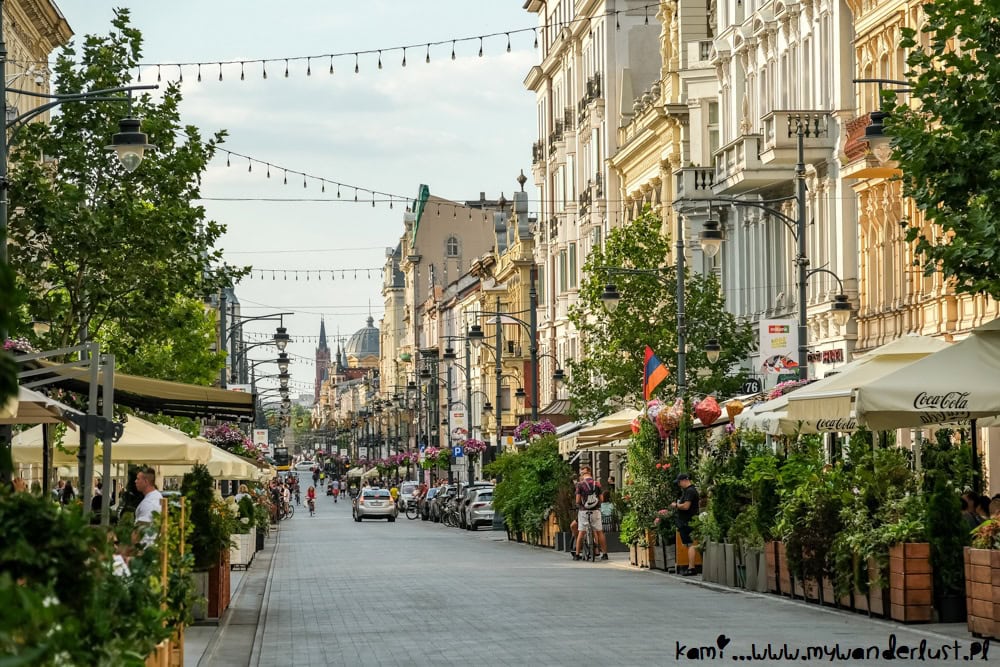
Most cities have market squares in old towns as their main venue, but Lodz has Piotrkowska Street. It is the second-longest street in the city and one of the longest commercial streets in Europe, spreading for almost 5 km in the heart of the city. However, the most beautiful part is between Plac Woloności and Piłsudskiego Street.
Even if Piotrkowska is such a long street, it doesn’t get boring to walk it all the way. The key to fully appreciating it is to look up and around to admire all the beautiful buildings you pass (many of them built in the eclectic and modernist styles, reminiscent of the wealth of times) and peek inside the gates to find some of the most charming yards. That was actually one of my favorite things to do in Lodz.
The street is lined with endless cafes, pubs, and restaurants, serving delicious food and drinks. If you get hungry or want to sit down and relax a bit, Piotrkowska Street is your place to go to.


Check quirky yards
While the architecture of Piotrkowska Street might get your full attention, be sure to check the yards on this street as well. The more, the better, as you never know what kind of wonders you can find there: hanging umbrellas, hidden cafes and restaurants, quirky art installations, and so much more.
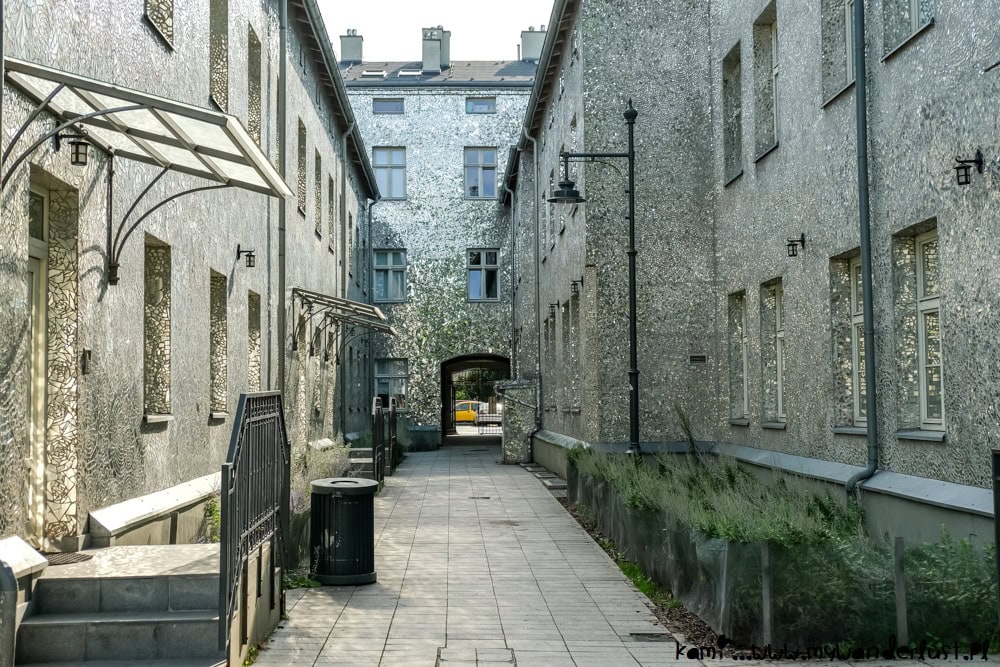
The most spectacular yard is located at Piotrkowska 3. It’s Rosa’s Passage, decorated with countless pieces of mirror. When the sun shines, the effect is mind-blowing! The whole place is glittering and looks like it’s from a fairy tale!


Enjoy the former factories turned into cool hangout spots
Lodz very quickly learned that former industrial sites can serve people in a new way. The city was something of a pioneer in transforming former factories into places locals and visitors want to spend time in.
The first and still the most popular place of that kind is “Off Piotrkowska”, located at Piotrkowska 138/140. The former spinning and weaving factory was transformed in 2011, and now around 50 small businesses operate there: designers, architects, restaurants, clubs, galleries, and concept stores (to name a few). In 2014, the place was named a new wonder of Poland in a contest organized by National Geographic.


But “Off Piotrkowska” isn’t the only place of that kind that you can find in Lodz. At Piotrkowska 217, in the former iron foundry, a culinary scene of Lodz is blooming. That’s where the street food festival and food market take place, but also where some really nice cafes and restaurants are located.
A newer addition to the city’s scenery is Monopolis, located in the former spirits production complex. Here you can also find numerous restaurants, cafes, and cultural institutions. Even if Monopolis is located a bit farther from the center, at 60/62 Kopcinskiego Street, it’s definitely worth a small detour.


Admire amazing street art
Lodz was the first Polish city to introduce and promote large-scale murals. Back in 2009, the local foundation Urban Forms started promoting the street art, inviting international artists like ROA from Belgium (known from Berlin street art) or Inti from Chile (you can find his works in Kosice, Slovakia too) as well as promoting local – and now world famous – artists, like ETAM Cru.
Of course, that’s not everything you can find in Lodz. Just keep your eyes open, and you will stumble across numerous Lodz murals all over the city, including old grand format advertisements. If you, however, need a hint on where to look for the street art works, the app “Street Art Cities” is a great help.
Even with so many works, they are spread out all over the city, and you don’t feel overwhelmed like in Gdansk. Big murals are just part of the local outdoor scene; they simply blend in.


Visit Izrael Poznański Palace
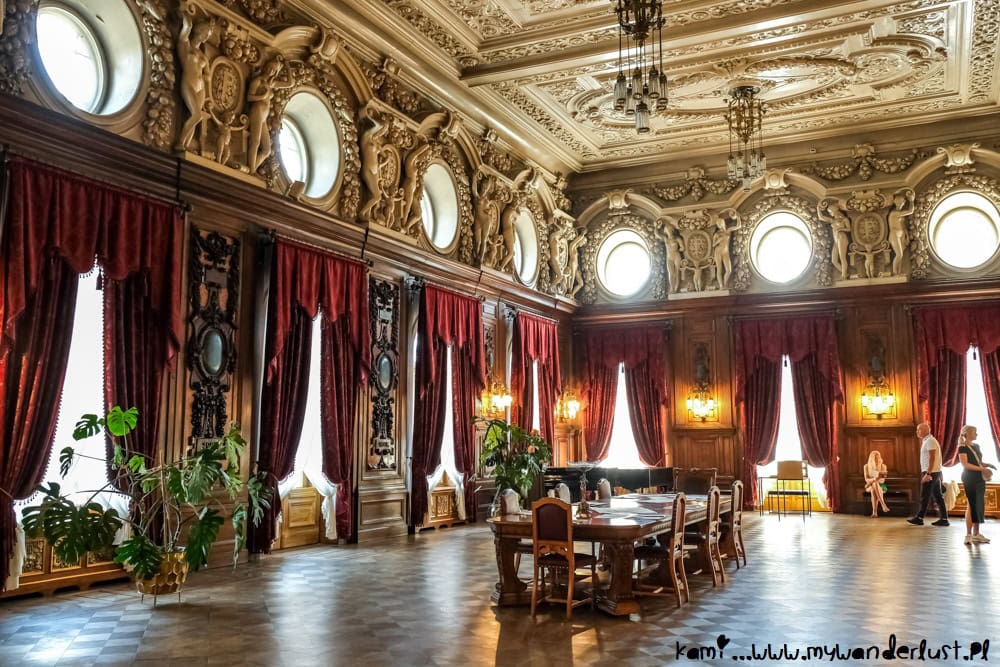
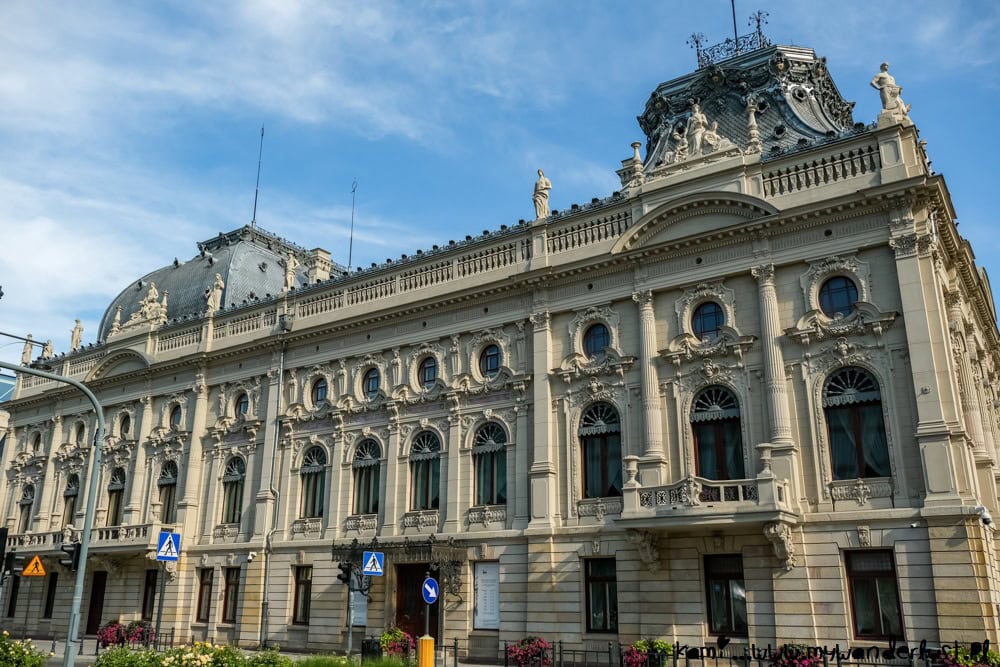
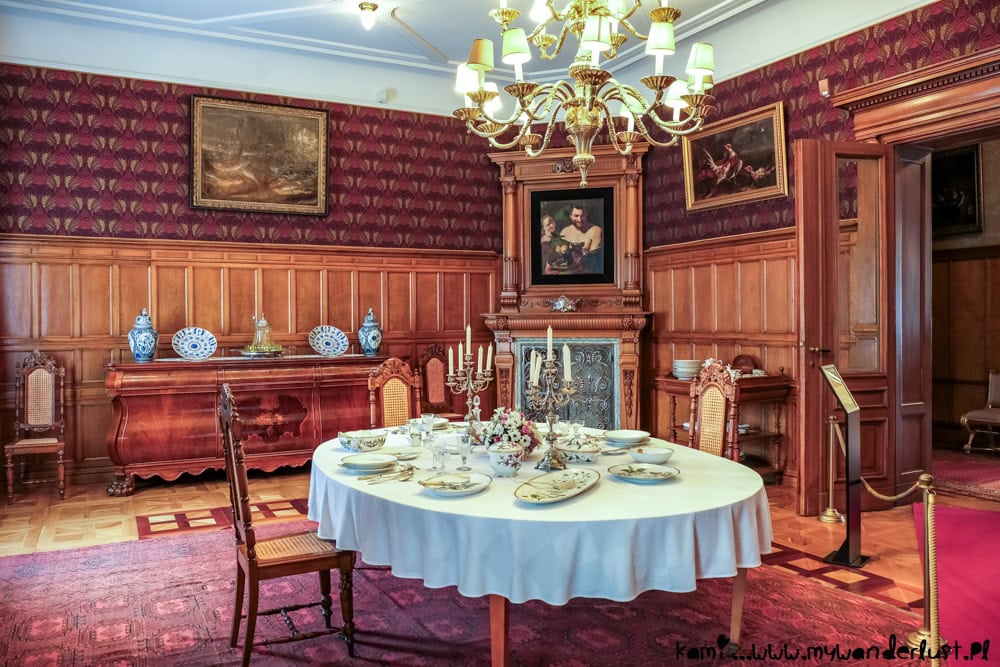
Of all the buildings you can see in Lodz, the most stunning one is the Izrael Poznański Palace. Built in 1877 and transformed into a Neo-Renaissance and Neo-Baroque style residence shortly after, the place impresses from the outside. The Poznański family was the wealthiest residents in Lodz at the turn of the 19th and 20th centuries, and you can clearly see it in their mansion. Due to its grandness and rich decor, the palace is even called “the Louver of Łódź”. Be sure to visit it inside, too, as that’s where the real beauty is. The ballroom and the dining room are simply jaw-dropping. Don’t miss the beautiful garden, too.
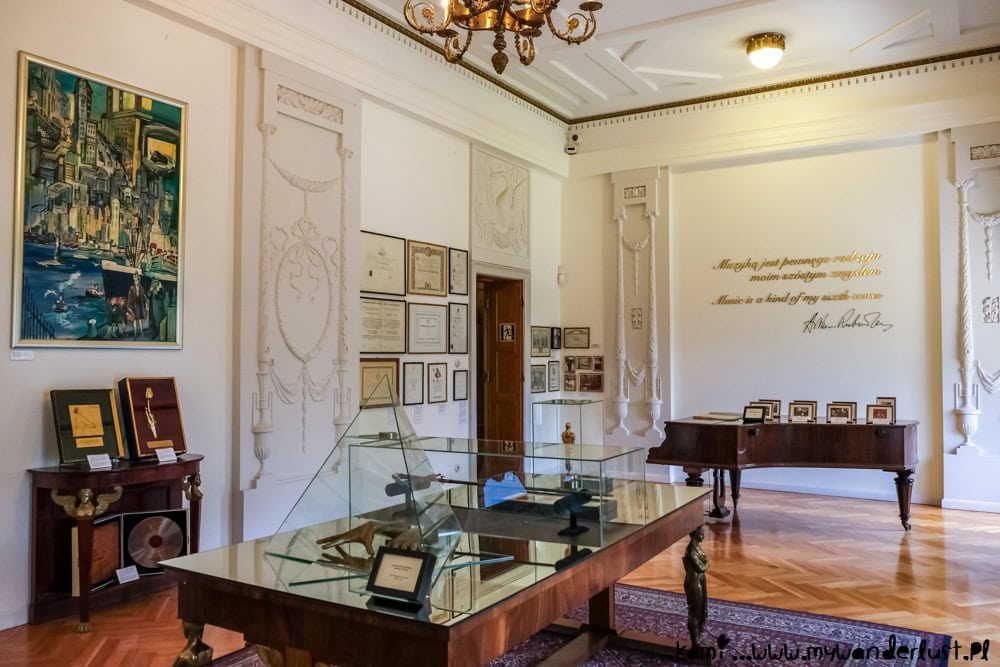
Today, the Poznański Palace is home to the Museum of the City of Łódź, so, in addition to the beautiful interior, you can also see an exhibition on the city’s history (located in the basement) and numerous memorabilia of Arthur Rubinstein, a world-famous pianist born in Łódź.


Admire Księży Młyn
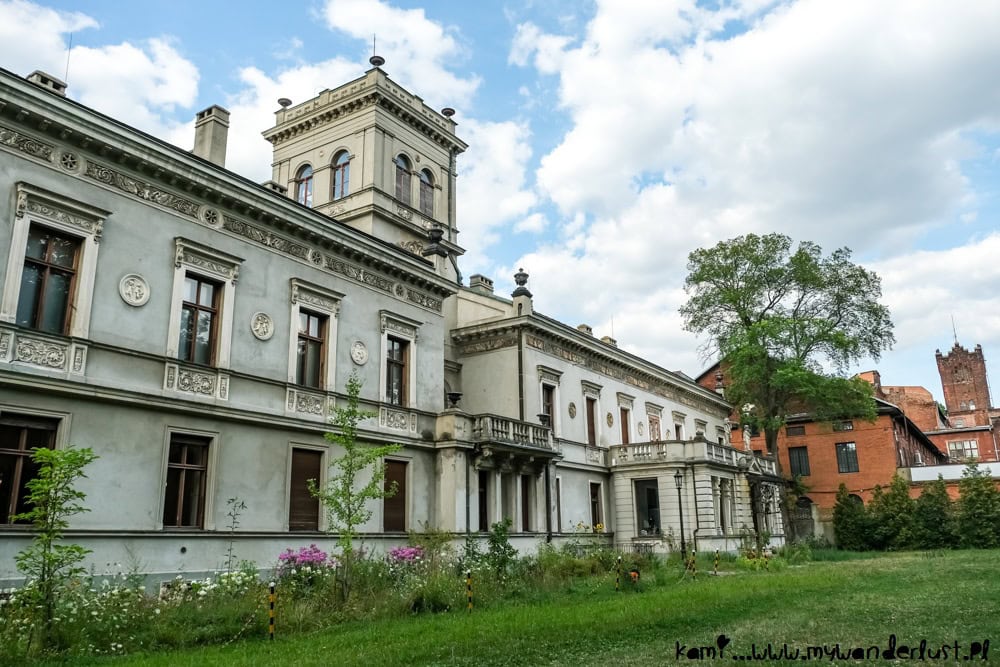
The Księży Młyn complex is one of the most impressive sights in Lodz. Built in the 19th century by the wealthiest industrialist in the city, Karol Scheibler, the place was designed to be self-sufficient, just like the English industrial settlements of the time. There were factories, such as the impressive cotton mill, as well as living quarters for workers, a school, two hospitals, shops, and more.
After the textile industry collapsed, Łódź had to reinvent itself. The cotton mill was transformed into a residential building. The surrounding area, with rows of brick houses and cobbled streets, is perfect for a stroll, and the place is full of restaurants, cafes, and cultural spaces. There is even a museum dedicated to Księży Młyn. This is one of the most picturesque places to visit in Łódź, so be sure not to miss it during your trip there.


Visit Herbst Villa
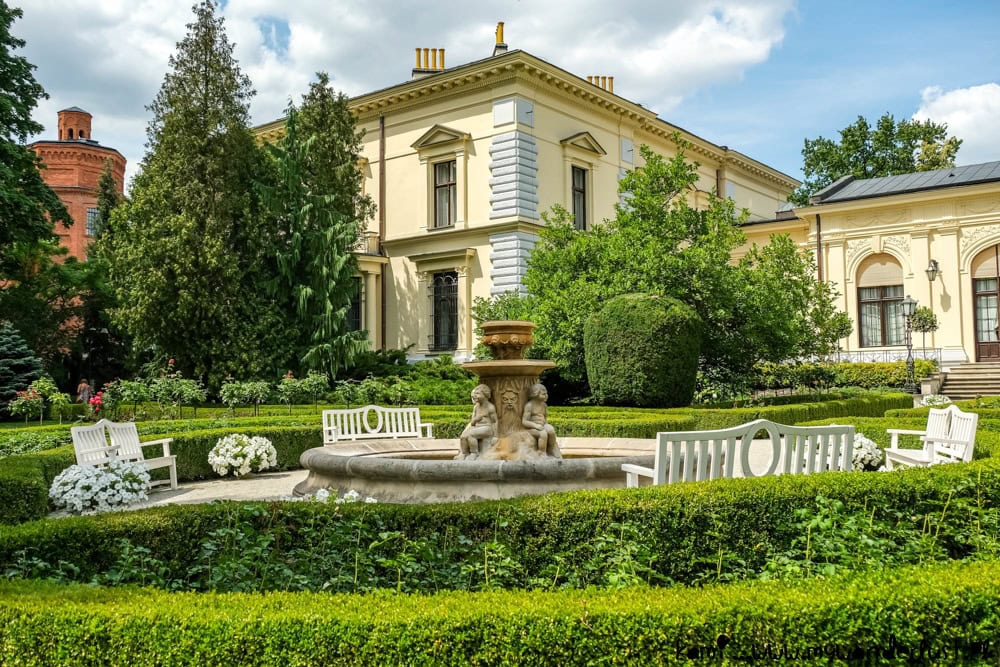
Located next to Księży Młyn, the Herbst Villa is one of the most beautiful buildings you can see in Lodz. It was built in 1876 for Karol Scheibler’s daughter, Matylda, and her husband Edward Herbst. The building was designed in the Neorenaissance style, with a stunning interior that showcases the family’s wealth and 19th-century trends.
Today, Herbst Villa is part of the City Art Museum, open to visitors. You can admire this beautiful place both inside and out, learn more about the Herbst family, and picture how the local aristocracy lived in the 19th century. The villa is surrounded by a lovely garden where you can relax a bit after all the sightseeing.


Find cartoon figures
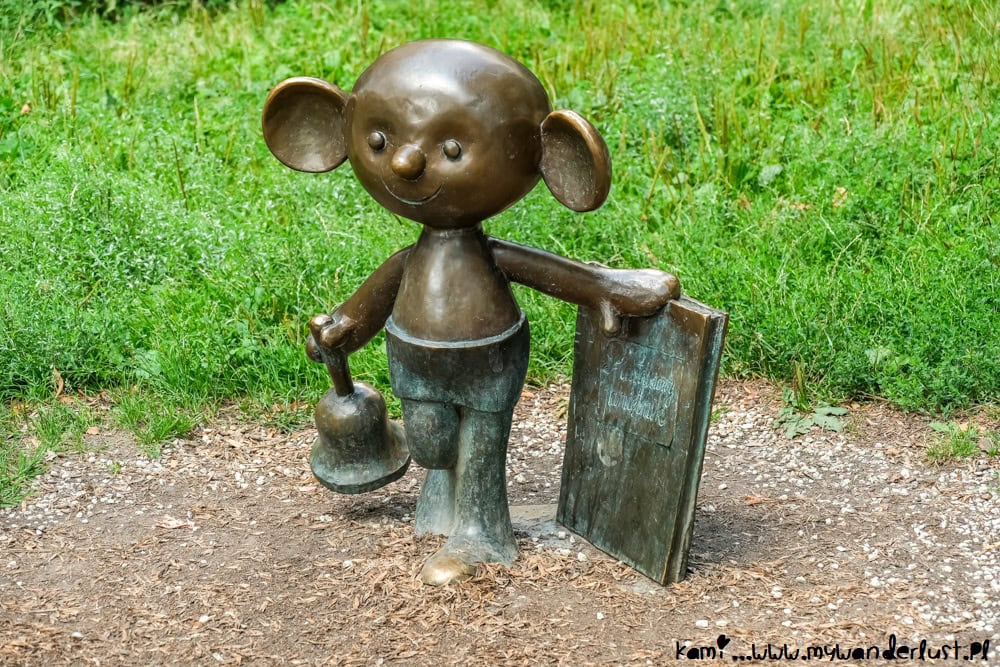
Łódź has a strong film tradition, including cartoons. In 1947, one of the most popular Polish cartoon studios, “Se-ma-for”, was founded in the city, the only puppet film production company in Poland. Over the years, some of the most iconic cartoons were made here; they were especially popular in the 1970s and 1980s.
One of the ways to commemorate the movie heritage in Lodz was to place some of the best-known cartoon figures throughout the city. If you stumble across them when wandering around, be sure to take a closer look, as they are really cute. Even if you don’t know those cartoons, I’m sure those little sculptures can put a smile on your face. Some of the places where you can find them are on Piotrkowska Street (at number 87), in the Sienkiewicz Park, at the Film Museum, and at the Wooden Architecture Museum.


Visit the Film Museum
If you are interested in the film industry, there is no better place to get an insight into it than the Film Museum in Lodz. It’s the only museum of that kind in Poland, opened in 1976. Even if you are not familiar with Polish movies, it’s still worth visiting the place.
There are over 70.000 artifacts collected here, focusing on the history of cinema, film technique, poster and set design, and animation. The museum is located in the former Scheibler’s palace, with beautiful interiors that are a bonus when visiting the place. Once you are done visiting the exhibition, be sure to check the area at the back of the building, where you will find props from the 1988 movie “Kingsajz”.

Visit the Palm House
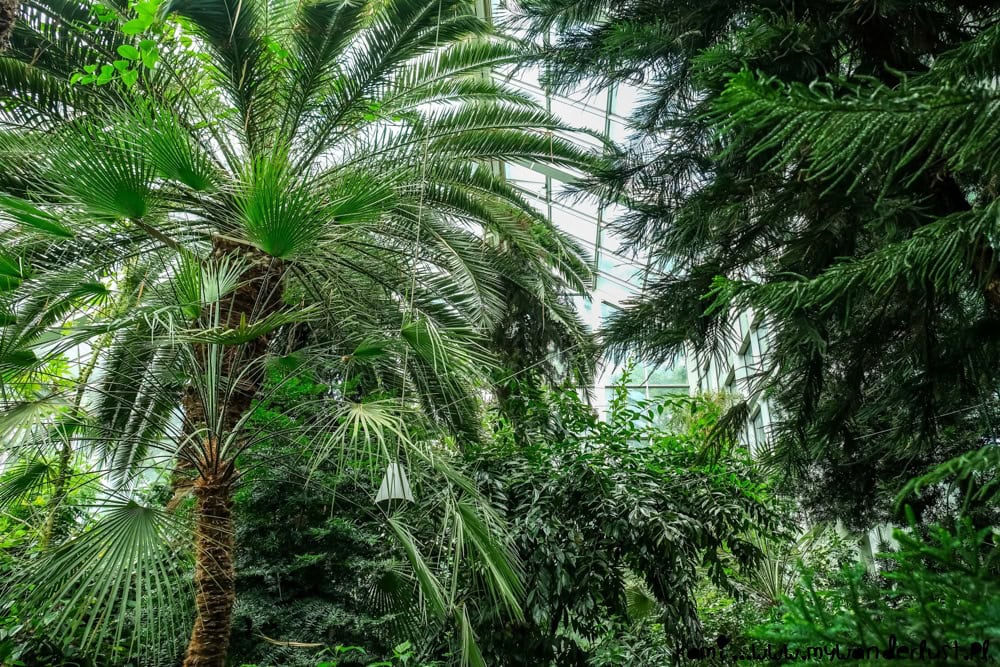
Although the Palm House in Lodz was officially opened in 1956, it is believed that its origins date back to the 19th century. That’s when the local industrialists created beautiful orangeries with rare and exotic plants as a green addition to their properties.
Today, there are over 4,000 plant specimens in the Lodz Palm Houses, representing around 1,000 species and varieties. It’s such a nice experience to visit the place and wander through all the green beauty. The Palm House is located near the Film Museum and Księży Młyn, making it easy to add to your Lodz itinerary.


Visit the Central Museum of Textiles
Located in the 19th-century White Factory, the Textiles Museum is one of the most interesting places you can visit in Lodz. It is, in fact, the first museum of that kind in the world, with the largest textile collection in Europe. Since Lodz is closely connected to this kind of industry, there was no better place to establish this kind of museum. It was also one of the first places in the world that used industrial space for museum purposes.
The Central Museum of Textiles was opened in 1954, focusing on the textile manufacturing process and everything connected to it. You can also see how some of the old machines used in this industry work. There is also a section of the exhibition on the history of the textile industry in Lodz, including products made here.
Besides the permanent exhibition, there are also temporary ones, which can be really interesting, too. During my visit, there was one featuring the work of one of the best-known Polish fashion designers – Arkadius. I remember when he was at the peak of his career in the late 1990s and early 2000s, and it was so good to see some of his best works from up close.


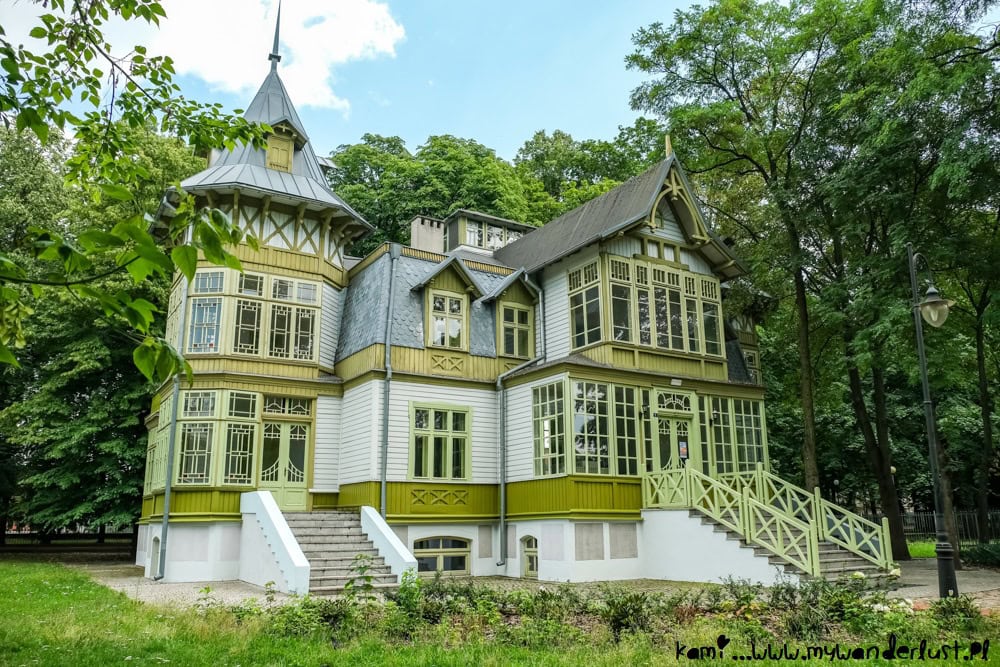
While you visit the Textile Museum, don’t miss the Wooden Architecture Skansen, located at the back of the White Factory. There are a few old houses typical of the architecture of Lodz at the turn of the 19th and 20th centuries, including a church, a villa, a house for workers, and craftsmen’s houses. Since this is part of the Central Museum of Textiles, with your ticket, you can visit all of the Skansen buildings inside.



Find the unicorns
One of the main tram stops in Lodz – Piotrkowska Centrum – has a cute nickname, “the unicorns’ stable”. The reason for the name is a colorful rooftop that looks especially beautiful on a sunny day. The redesign stop was opened in 2015, and its new look was inspired by the Art Nouveau architecture that you can see all over Lodz. The unicorn reference was so well-received that it is now used in the official maps and materials. Don’t miss the statue of the unicorn, located across the street from the tram stop, at the corner of Piotrkowska and Piłsudskiego streets.


Visit art museums
Lodz has a really good Museum of Art that focuses on modern and contemporary art, especially the avant-garde movement in Central and Eastern Europe. It was founded in 1931 as the first museum in Europe dedicated to modern art and the second museum of that kind in the world (after MoMA in New York).
If you enjoy this kind of art, don’t miss two branches of the Museum of Art in Lodz – ms1 and ms2. The other reason why this museum is worth visiting is the location. ms1 is located in the neo-renaissance Maurycy Poznanski Palace, and ms2 in the former factory owned by Izrael Poznanski; both places date back to the 19th century.


Explore the Jewish Cemetery
Even if the Jewish Cemetery is located a bit away from the center, it’s worth a short detour to get there (and you can easily reach it by tram). It was opened in 1892 and is still operating to this day. It used to be the largest Jewish cemetery in Poland and one of the largest in the world. Still today, it impresses with its size and volume, with over 150.000 tombstones (matzevahs) preserved.
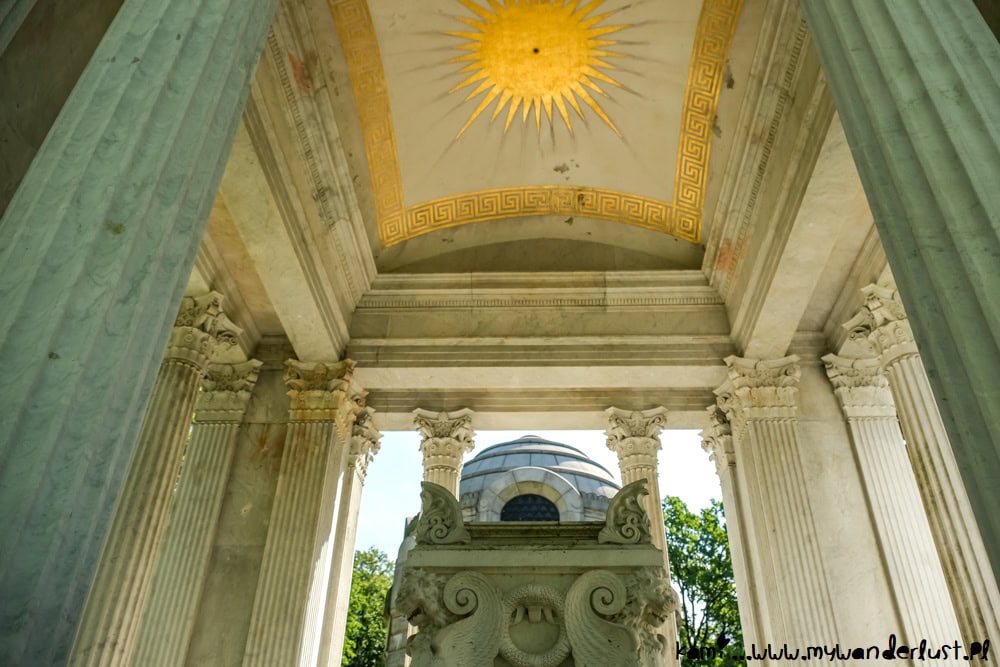
The most important grave is that of Izrael Poznanski – the impressive Art Nouveau mausoleum dedicated to the wealthiest family in Lodz was built between 1901 and 1903, and designed by Poznanski himself. Still today, it is considered to be the largest Jewish grave in the world. You can find it on the left side, slightly off the main lane; it’s impossible to miss it.
Don’t focus only on the cemetery; be sure to take a closer look at the Funeral Home, too. It was built in 1898, and today you can find interesting exhibitions and beautiful pictures there, as well as admire the original interior.




Learn about the Lodz ghetto at the Radegast station
Not far from the Jewish cemetery, you can visit the Radegast train station, today home of the History Museum. During World War 2 the station was used for the Lodz ghetto, first to bring supplies to the enclosed area and, starting on January 16th, 1942, for transporting Jews to the extermination camps.
Today, the small station is where you can learn more about the Lodz ghetto, its history, and everyday life. There are also memorials commemorating the victims of the Nazis and the train carriages that can help you realize the cruel reality of the war.


Discover EC1
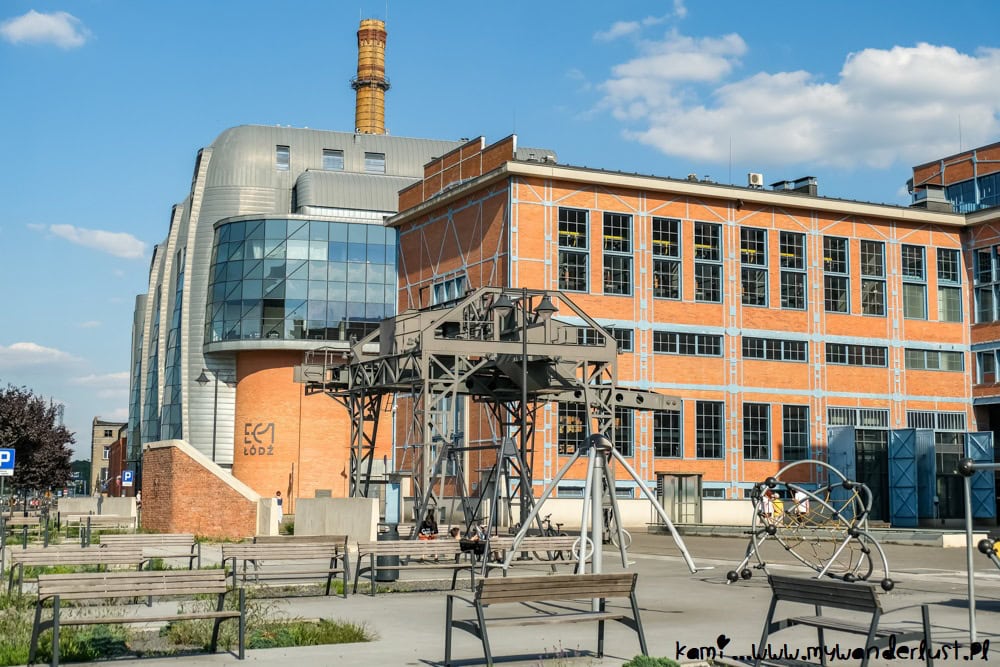
Located on the revitalized grounds of the first power plant in Lodz (dating back to the early 20th century), the EC1 is a cultural and scientific space with numerous institutions to enjoy. There’s the Planetarium, the EC1 Science and Technology Center, the National Center for Film Culture, the Center for Comics and Interactive Narrative, and more. It’s such a fun and interesting place, so if you are looking for unusual attractions in Lodz, EC1 might be a place for you.


Visit the Art Nouveau villa
Built in 1903, this villa is one of the best examples of Art Nouveau architecture in Lodz. Both inside and out, you will find original floral ornaments; there is also a stunning stained-glass window, a perfect Art Nouveau masterpiece. Today, this is one of the branches of the City Art Gallery, so besides the beautiful interior, you might also see an interesting exhibition when you visit.
You can find the Art Nouveau villa not too far from Piotrkowska Street, at 31 Wólczańska Street.


See cool neon signs
One of the newest Lodz attractions is a collection of neon signs designed to resemble those that used to hang at old cinemas in the city. It’s such a cool installation that looks especially beautiful in the evening, when all the neon signs are lit up. You will find them a few steps away from Piotrkowska Street, at Margaret Thatcher Passage.
See remnants of different factories
Since Lodz has been a very industrial city, you can find remnants of various factories all over the place. Some of them are still in rather poor condition, while others have been beautifully renovated and used for various purposes (galleries, hangout spots, hotels, housing estates, etc.). Altogether, they are a great reminder of the rich Lodz past, and looking at them can help you imagine what the city used to look like.


Visit churches
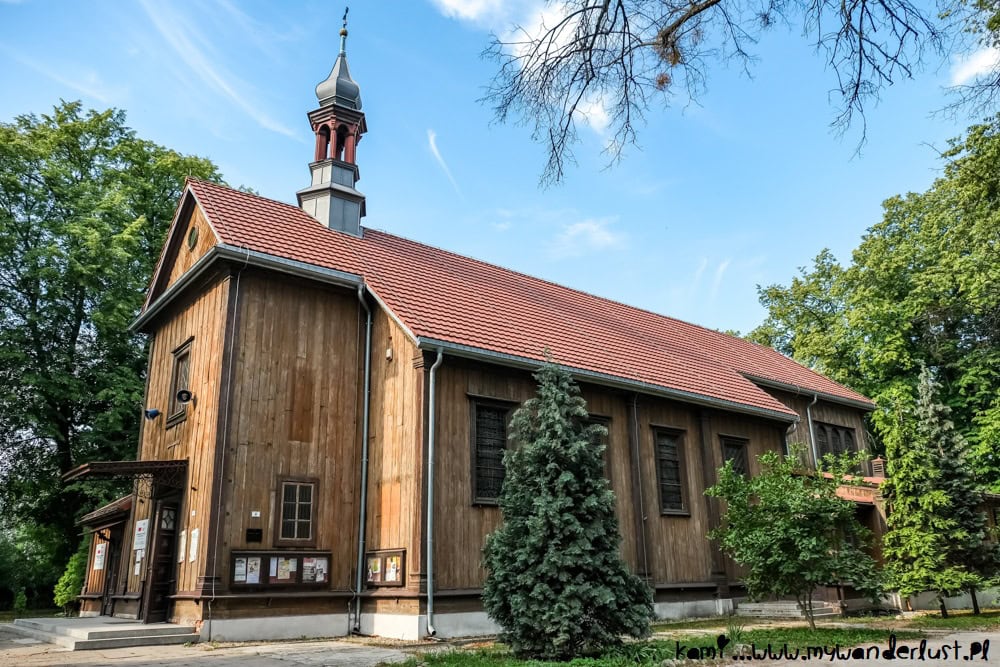
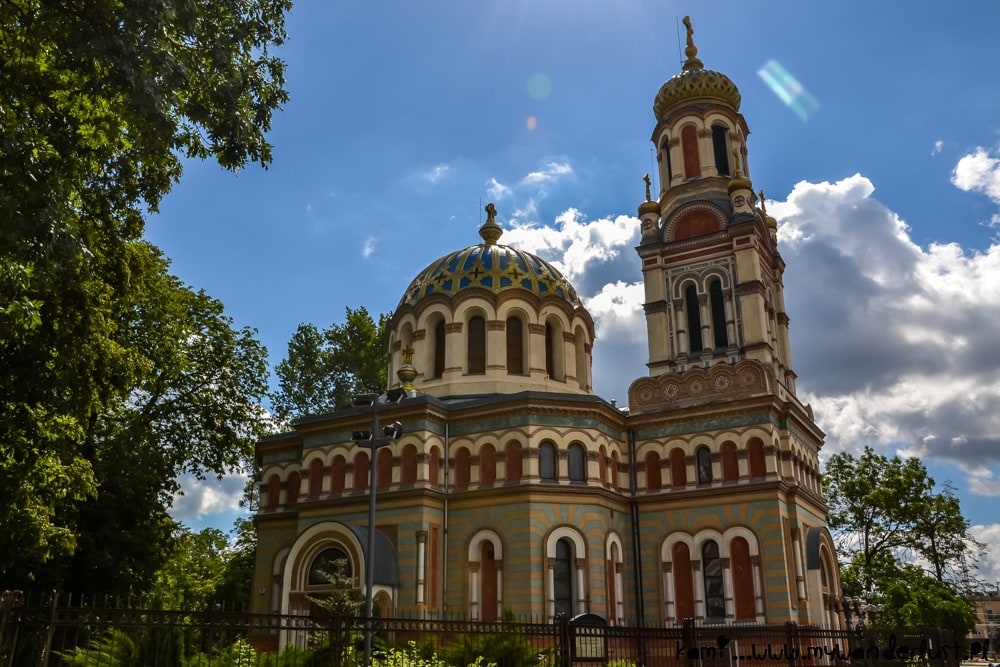
Just like other places in Poland, Lodz has some interesting churches that might be worth seeing. The oldest church in Lodz and the only building in the city that dates back to pre-industrial times is St. Joseph’s Church, located next to the Manufaktura shopping center. Originally from the 14th century, the current building dates back to the 1700s.
Other churches worth seeing are Church of the Descent of the Holy Spirit (near the Rose Passage), St. Alexander Nevsky Orthodox Cathedral (next to the Łódź Fabryczna train station), Church of the Assumption of the Blessed Virgin Mary Archcathedral (near the City Park), Basilica of St. Stanislaus Kostka and St. Matthew’s Evangelical-Augsburg Church (both near the Textile Factory).

Relax in the parks
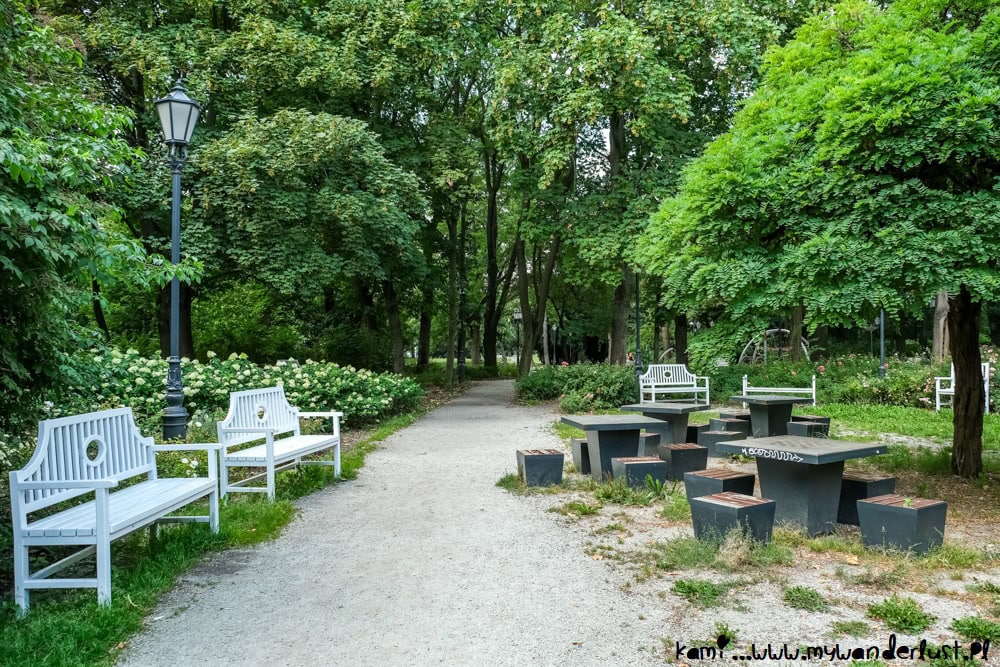
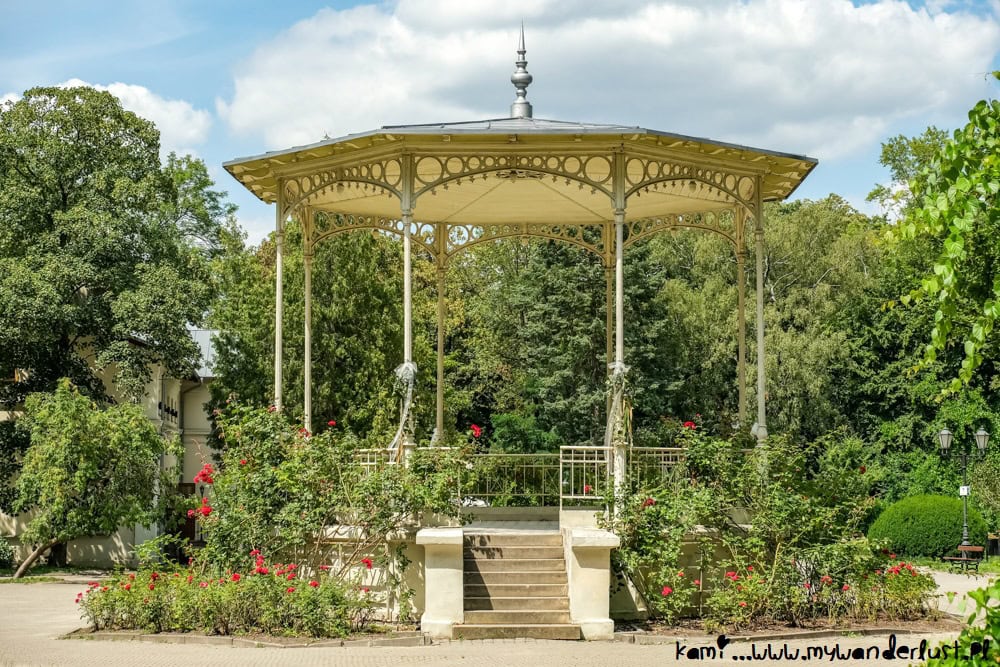
If you get tired of sightseeing (or hanging out in all the cool spots), Lodz has some nice parks where you can relax a bit in a green setting. Some of my favorite ones are Park Staromiejski, Park im. Henryka Sienkiewicza, Park Źródliska, and Park im. Władysława Reymonta. They are all located close to the center and near some of the attractions, so it’s easy to stop by any of them and enjoy the greenery all around.
Shop at Manufaktura shopping center
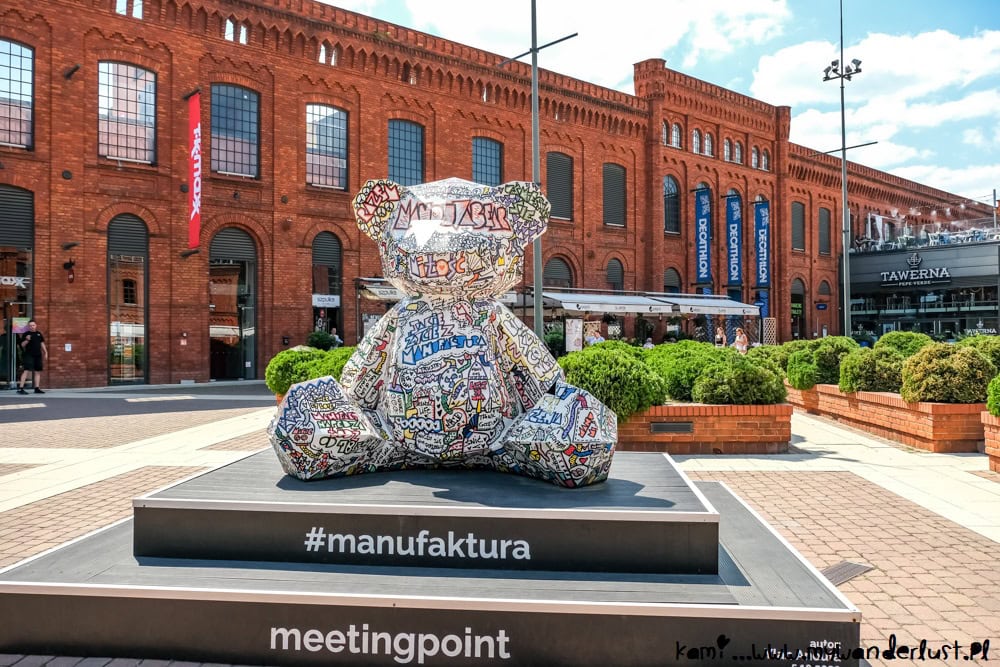
While I’m not a big fan of shopping centers, Manufaktura in Lodz is worth visiting for more than just its commercial purposes. Located on the former premises of Izrael Poznanski’s factory complex, this is the largest commercial and entertainment center in Central Europe. The place is simply impressive, and all the renovated industrial buildings are the prettiest, with their red-brick facades. Besides around 260 shops, you can find numerous cultural institutions (cinemas, museums, etc), as well as around 60 cafes and restaurants.



Find the film heritage
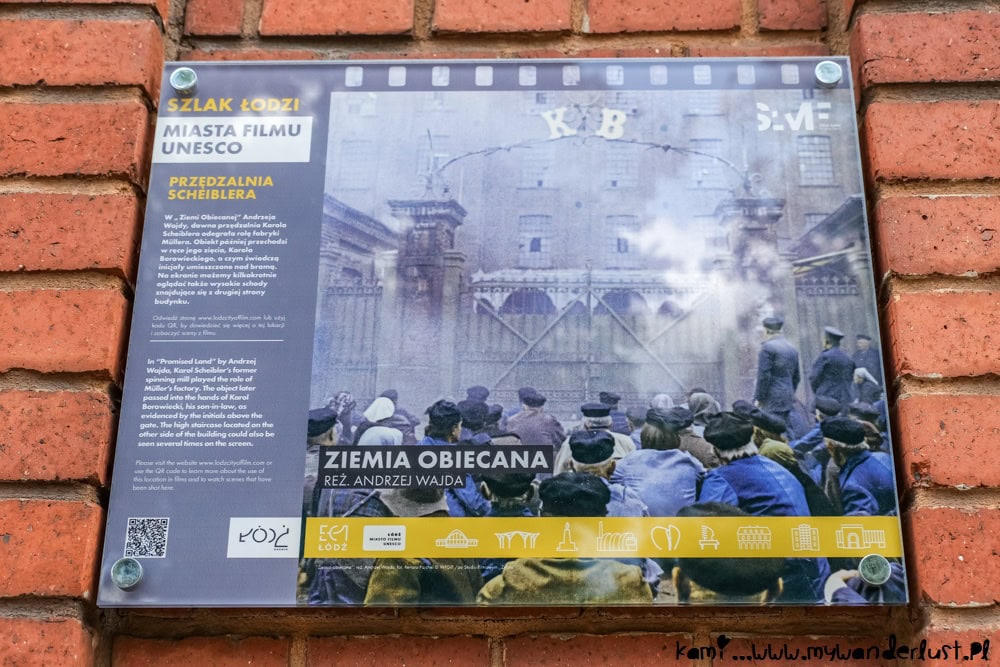
Lodz is home to the most famous Film School in Poland, with many well-known alums (including four Oscar winners). The sidewalk along Piotrkowska Street is decorated with stars (as in Hollywood), commemorating the most influential figures in Poland’s film industry: directors, actors, composers, screenwriters, and more.
Lodz is also a popular place to film movies, both local and international ones. When sightseeing in Lodz, you can also find information boards featuring scenes from popular Polish movies filmed there. You might find them at Księży Młyn or near the historical gate of the Manufaktura center, to name a few spots.

Visiting Lodz – practical information
How to get to Lodz
Lodz is well-connected to cities across Poland. There are numerous direct trains throughout the day from Warsaw, as well as connections from Krakow, Katowice, Poznan, Wroclaw, Lublin, and Gdansk. The city also has a small international airport, with Ryanair flights from a few European countries.
Train stations in Lodz
There are a few major train stations in Lodz, and not all trains stop at each one. The one closest to the center is Łódź Fabryczna, but only some trains from Warsaw terminate here. Otherwise, trains stop at Łódź Widzew, Łódź Chojny, or Łódź Kaliska, from where you can take the tram to reach the center.

How many days do you need to visit Lodz?
You can see the main Lodz attractions in one day, but to fully enjoy the city and to visit places a bit further away, you need at least two days.
Where to stay in Lodz
There are plenty of accommodation options to choose from in Lodz, including hotels located in former factories. When looking for a place to stay in Lodz, I recommend choosing a spot within walking distance of Piotrkowska Street. This way, you will be relatively close to all the main sights.
Here are the recommended places to stay in Lodz

How to get around Łódź
While most of the attractions are located along Piotrkowska Street and within walking distance from it, there are places where you might need to take a tram or a bus to get to. Fortunately, the public transport in Lodz is pretty decent, with current routes and schedules showing on Google Maps. It’s best to get a 24-hour ticket to move around the city easily. You can get it at newsstands and via apps (such as Skycash); there are also ticket machines inside some vehicles.

Where to go next
From Lodz, you can continue your trip around Poland to one of the main cities: Warsaw, Krakow, Wroclaw, Poznan, Torun, Gdansk, Lublin, or Katowice. There are also smaller places, not too far from Lodz, that are interesting: Płock, Żyrardów, or Łęczyca. The country really has a lot to offer, and it’s up to you which amazing destinations you include in your Poland itinerary.
If you found this article useful, I would really appreciate a small donation to help me run this website and provide you with even more practical content to help you plan your trips.

You can also subscribe to my newsletter to get updates on new articles I publish; just click here.
Further reading
I published many articles about Poland that you might find useful when planning your trip there. Here are some of them:
If you are looking for articles about a specific destination – check out the map with all the articles I’ve published (and their locations). You can also join my Facebook group about traveling in Central Europe and ask your questions there.
Travel Resources
Below you can find the brands I trust and use when planning trips:
For the end I left a few announcements that might interest you:
- Sign up to my newsletter or follow me on Bloglovin to get updates about the new posts
- Join my Facebook group about Eastern Europe, the Balkans and former USSR and connect with fellow travellers and enthusiasts of these regions – just click here!
- I’ve included a few handy links of services and products I personally like and use so you can plan your own trip to Poland too. They are often affiliate links. This means I will get a small commission if you book/purchase anything through my links, at no extra costs for you. Thank you!
LIKED IT? PIN THIS POST FOR LATER!
If you enjoyed that post why don”t you share it with your friends? That would mean so much to me! Also be sure to join 30.000+ fellow travelers and follow me on Facebook, Twitter, or Instagram for travel updates and even more pictures! If you don’t want to miss new posts sign up to my newsletter or follow on Bloglovin!

Stacie Harris is a local resident and reporter of the Maple Grove area. Stacie reports on medicine and science for the Maple Grove Report.