Small warehouse operators have spent the last few years caught between rising insurance premiums, a tight labor market, and customers who expect Amazon-grade fulfillment from a 12-person team.
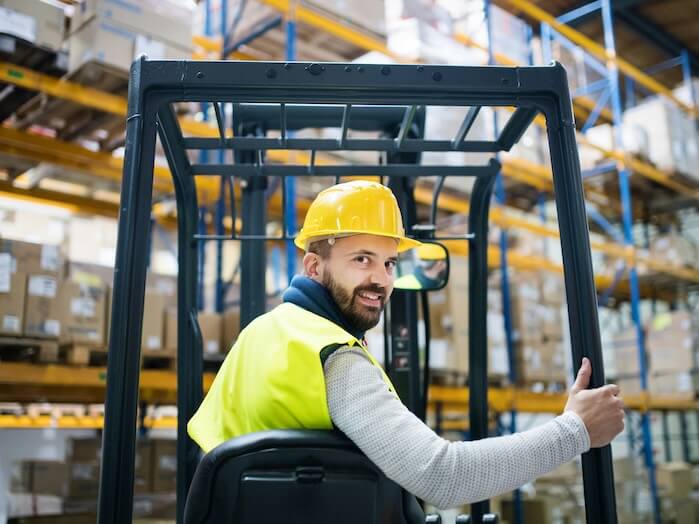
One line item keeps showing up at the top of the cost-cutting list in 2026: workplace injuries. And the smartest operators aren’t fighting that cost with new safety posters or another toolbox talk. They’re rebuilding how they train the people behind the wheel of a forklift.
It’s a quiet shift, but a meaningful one. Owners who used to treat operator training as a compliance chore are now treating it like a profit center. The math is simple: every avoided incident protects margin, insurance standing, and the handful of skilled workers a small operation can’t afford to lose.
The real price tag of a warehouse injury
Most small operators underestimate what a single forklift incident costs them. The direct hospital bill is only the start. There’s lost productivity, equipment damage, an OSHA investigation, possible citations, higher workers’ comp premiums for years afterward, and the ripple effect on the rest of the crew.
The National Safety Council pegs the average cost of a medically consulted work injury at roughly $43,000, once you include wage and productivity losses, medical expenses, and administrative costs. For a 20-person warehouse, one bad afternoon can wipe out a quarter of profit.
Forklifts sit at the center of this risk. OSHA has long flagged powered industrial trucks as one of the most frequently cited standards in general industry, and forklift-related events still account for a significant share of warehouse fatalities each year. The agency’s own guidance keeps coming back to one root cause: operator training that exists on paper but never made it into the operator’s habits.
Why the old training model stopped working
The traditional approach was simple. Hire someone, sit them in a breakroom with a VHS tape (later a DVD, later a dusty laptop), have them sign a sheet, hand them keys. Done. That worked when turnover was low and shifts were predictable. In 2026, neither is true.
Warehouse turnover still runs hot. The Bureau of Labor Statistics has tracked transportation and warehousing as one of the higher-churn sectors, which means small operators are constantly onboarding new operators while veterans get pulled to cover gaps. A four-hour classroom session once a year can’t keep up with that pace. Worse, it doesn’t catch the bad habits that form between certifications.
There’s also a generational piece. Newer workers expect training to feel like the rest of their digital lives: on-demand, mobile-friendly, and quick to the point. Hand them a 90-minute lecture and attention drops off a cliff after the first 15 minutes.
What the new playbook looks like
Operators getting results in 2026 share a few common moves. First, they’ve moved the bulk of classroom training online so a new hire can be productive on day one instead of day three.
Online forklift certification platforms let a supervisor enroll a worker, watch them complete the coursework on a phone or tablet, and then handle the hands-on evaluation the same shift. That alone trims days off the onboarding clock.
Second, they’ve broken training into shorter, repeating pieces. Instead of one annual marathon, operators get short refreshers tied to seasonal volume changes, new equipment, or near-miss reports. Microlearning sticks better, and it gives supervisors a paper trail that holds up if an inspector shows up.
Third, they’re using the data. Modern platforms log who finished what and when, which makes it easy to spot the operator who hasn’t refreshed in 30 months or the new hire whose evaluation never got signed off. Small things, but they’re the gaps that cause incidents.
Insurance carriers are paying attention
Workers’ comp underwriters have grown sharper about which warehouses they want to insure. Carriers increasingly ask for proof of a written training program, documented refreshers, and evaluation records during renewal. Operators who can produce that paperwork on demand are getting better quotes; those who can’t are watching premiums climb.
That’s a meaningful lever for a small business. According to OSHA, businesses that invest in safety and health management programs often see reductions in injury rates and related costs, which carriers reward at renewal time. For a warehouse running on thin margins, a single-digit percentage drop on a workers’ comp policy can pay for the entire training program twice over.
Where to start if you run a small operation
If you’ve got a handful of forklifts and no formal training program, the first move isn’t buying new equipment or hiring a safety consultant. It’s auditing what you already have. Pull every operator’s certification date. Note who’s overdue. Look at your last 12 months of near-misses and minor damage, then ask whether the operator involved had a current evaluation on file.
From there, pick a training format your team will actually use. For most small operators, that means an online program for the classroom portion and a structured in-house evaluation for the practical. Keep the records in one place, set calendar reminders for three-year renewals, and tie new-hire orientation to certification before anyone touches a key.
None of this is glamorous. But the warehouses cutting injury costs in 2026 aren’t doing anything exotic. They’ve stopped treating operator training as a box to check and started treating it as the cheapest insurance policy they can buy.